Why Businesses Need Cybersecurity Expertise in 2026


More than 80 percent of British law firms have reported cyber attacks in the past year, highlighting a growing risk to client confidentiality and regulatory compliance. As pressure mounts from both regulators and clients, mid-sized law firm directors must navigate a digital environment where traditional defences are no longer enough. Understanding what truly defines business cybersecurity can help your firm protect sensitive data, comply with strict United Kingdom standards, and safeguard your hard-earned reputation.
Table of Contents
Key Takeaways
Point | Details |
Comprehensive Cybersecurity | Business cybersecurity goes beyond IT; it requires involvement from all employees and a holistic risk management approach. |
Evolving Threat Landscape | Cyber threats have become more sophisticated, meaning reliance on basic security measures is insufficient for protection. |
Regulatory Compliance | SMEs must understand and comply with frameworks like GDPR and NIS Regulations to avoid severe penalties. |
Proactive Leadership | Proactive cybersecurity strategies can enhance competitive positioning and operational resilience while fostering stakeholder trust. |
Defining Business Cybersecurity and Key Misconceptions
Business cybersecurity represents a comprehensive strategic approach to protecting digital assets, networks, and information systems against sophisticated cyber threats. At its core, it encompasses far more than basic technical defences, requiring a holistic understanding of digital risk management tailored specifically to organisational context.
Contrary to widespread misconceptions, cybersecurity is not merely an IT department responsibility. The evolving landscape of cybercrime demonstrates that cyber threats represent enterprise-wide challenges requiring collaborative engagement across departments. Modern businesses must recognise that every employee represents a potential security vulnerability, from administrative staff handling sensitive emails to executive leadership managing strategic communications.
Key misconceptions about cybersecurity often stem from outdated perceptions of digital threats. Many organisations erroneously believe that standard antivirus software and basic firewall configurations provide comprehensive protection. However, contemporary cyber attacks are increasingly sophisticated, employing complex social engineering techniques, ransomware strategies, and targeted infiltration methods that bypass traditional security measures. Small and medium enterprises are particularly vulnerable, with cybercriminals recognising these organisations frequently lack robust defensive infrastructures.
Pro Cybersecurity Strategy Tip: Conduct a comprehensive cybersecurity risk assessment annually, involving representatives from multiple departments to identify potential vulnerabilities across your entire organisational ecosystem.
To clarify the role of cybersecurity across the business, here is a comparison of traditional and modern approaches:
Aspect | Traditional Cybersecurity | Modern Business Cybersecurity |
Responsibility | IT department only | All staff and leadership involved |
Focus | Technical defences | Enterprise-wide risk management |
Threat Model | Viruses, basic attacks | Sophisticated, multi-layered threats |
Employee Involvement | Minimal awareness | Ongoing engagement and training |
Response Strategy | Reactive to incidents | Proactive, preventative measures |
Types of Cyber Threats Facing UK Organisations
The cyber threat landscape in the United Kingdom represents a complex and rapidly evolving digital battleground where organisations face increasingly sophisticated and targeted attacks. According to government cybersecurity research, phishing attacks remain the most prevalent cyber threat, affecting an overwhelming 89% of businesses and demonstrating the critical need for comprehensive digital defence strategies.
Beyond phishing, UK organisations confront a multifaceted array of cyber threats that can compromise operational integrity and financial stability. Ransomware attacks represent a particularly dangerous vector, with potential consequences extending beyond individual businesses to potentially disrupting critical national infrastructure. These malicious interventions often target vulnerabilities in network security, exploiting human error, outdated software, and insufficient security protocols.
The most common cyber threats facing UK organisations include sophisticated attack vectors such as:
Phishing and Social Engineering: Manipulative tactics designed to trick employees into revealing sensitive information
Ransomware: Malicious software that encrypts organisational data, demanding financial payment for restoration
Malware Infiltration: Covert software designed to damage or gain unauthorised access to computer systems
Distributed Denial of Service (DDoS) Attacks: Overwhelming network resources to disrupt business operations
Insider Threats: Potential security risks originating from within the organisation
Pro Threat Management Tip: Develop a comprehensive incident response plan that includes regular employee cybersecurity training, ensuring every team member understands their role in maintaining organisational digital resilience.
Legal and Regulatory Cybersecurity Requirements for SMEs
Navigating the complex landscape of legal and regulatory cybersecurity requirements represents a critical challenge for Small and Medium Enterprises (SMEs) in the United Kingdom. Government initiatives to combat cyber threats underscore the increasing regulatory pressure on businesses to develop robust digital defence mechanisms and demonstrate proactive cybersecurity management.
Key regulatory frameworks that SMEs must comprehend and comply with include the General Data Protection Regulation (GDPR), the Network and Information Systems (NIS) Regulations, and Cyber Essentials certification standards. These frameworks establish mandatory requirements for data protection, incident reporting, and minimum cybersecurity standards. Failure to comply can result in significant financial penalties, with potential fines reaching up to £17.5 million or 4% of global annual turnover, depending on the severity of the breach and the organisation’s data handling practices.
The specific legal obligations for SMEs typically encompass several critical areas:
Data Protection: Implementing appropriate technical and organisational measures to protect personal data
Incident Reporting: Establishing clear protocols for reporting cybersecurity breaches within 72 hours
Risk Management: Conducting regular risk assessments and maintaining comprehensive security documentation
Access Controls: Developing stringent authentication and access management procedures
Third-Party Risk Management: Evaluating and monitoring the cybersecurity practices of suppliers and partners
Pro Compliance Strategy Tip: Develop a comprehensive compliance roadmap that integrates legal requirements with practical cybersecurity measures, treating regulatory compliance as an ongoing strategic process rather than a one-time checkbox exercise.
For SME leaders, understanding key regulatory frameworks is crucial. The table below summarises main UK cybersecurity requirements:
Regulation | Main Purpose | Key Elements | Potential Penalties |
GDPR | Personal data protection | Data breach reporting, safeguards | Up to £17.5M or 4% turnover |
NIS Regulations | Network/data resilience | Incident notification, risk controls | Substantial fines for non-compliance |
Cyber Essentials | Baseline cyber hygiene | Technical controls, certification | Loss of contracts, reputational harm |
Operational and Financial Risks of Cyber Incidents
Cyber incidents represent far more than technical disruptions, presenting profound existential threats to organisational sustainability. Government research on cybersecurity breaches reveals the multifaceted financial and operational risks that can devastate unprepared businesses, with potential consequences extending far beyond immediate monetary losses.

The financial implications of cyber incidents are staggering and multidimensional. Direct costs can include ransom payments, system restoration expenses, and legal fees, while indirect costs encompass reputational damage, lost productivity, and diminished customer trust. National crime statistics highlight that cyber attacks can trigger catastrophic operational disruptions, potentially rendering critical business systems completely inaccessible and forcing complete operational shutdown.
Specific operational and financial risks include:
Revenue Interruption: Extended system downtime leading to immediate revenue losses
Reputation Damage: Erosion of customer and stakeholder confidence
Compliance Penalties: Significant financial fines for data protection violations
Intellectual Property Compromise: Potential theft or exposure of sensitive business information
Supply Chain Disruption: Cascading impacts affecting business partnerships and contractual obligations
Recovery Expenses: Substantial costs associated with system restoration and cybersecurity remediation
Pro Risk Management Tip: Conduct a comprehensive cyber risk assessment annually, quantifying potential financial exposure and developing targeted mitigation strategies that align with your specific business model and technological infrastructure.
Benefits of Proactive Cybersecurity Leadership for SMEs
Proactive cybersecurity leadership represents a strategic imperative for Small and Medium Enterprises (SMEs) seeking to transform digital risk from a potential vulnerability into a competitive advantage. Cyber protection strategies demonstrate that organisations which anticipate and systematically manage digital threats can create robust resilience mechanisms that protect both operational continuity and organisational reputation.
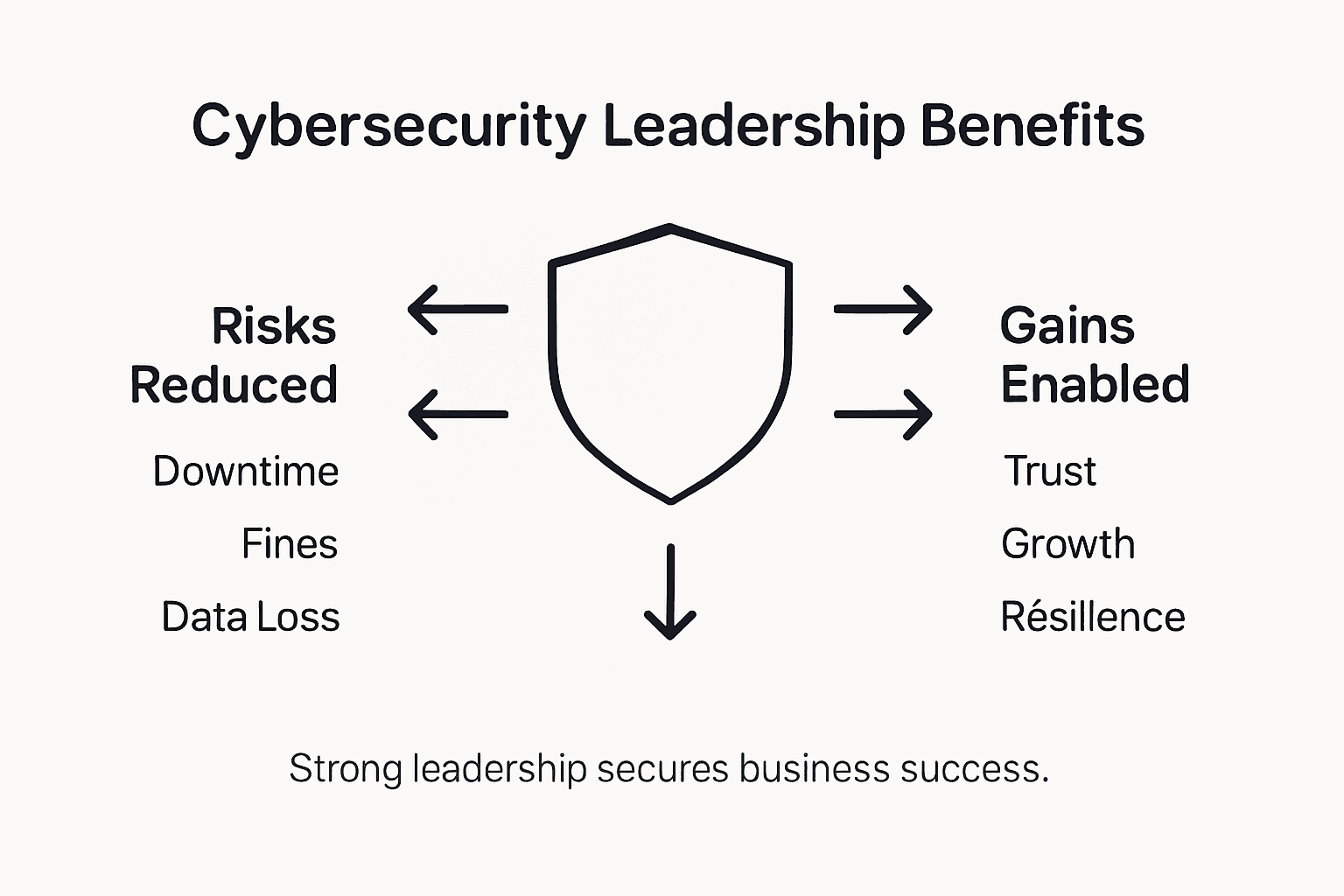
The strategic benefits of proactive cybersecurity leadership extend far beyond basic technical defence. By developing a comprehensive, forward-thinking approach to digital security, SMEs can unlock numerous organisational advantages that directly impact business performance, stakeholder confidence, and long-term sustainability. This approach transforms cybersecurity from a reactive compliance exercise into a dynamic business enabler that supports strategic growth and innovation.
Key benefits of proactive cybersecurity leadership include:
Enhanced Competitive Positioning: Demonstrating superior security credentials to potential clients and partners
Operational Resilience: Minimising potential disruptions and maintaining business continuity
Risk Management: Identifying and mitigating potential vulnerabilities before they become critical threats
Cost Efficiency: Reducing potential financial losses associated with cyber incidents
Regulatory Compliance: Staying ahead of evolving legal and industry security requirements
Stakeholder Trust: Building confidence among customers, investors, and regulatory bodies
Pro Strategic Cybersecurity Tip: Develop a dynamic, adaptable cybersecurity strategy that integrates continuous learning, regular risk assessments, and agile response mechanisms, treating security as an ongoing organisational capability rather than a static technical solution.
Secure Your Business Future with Expert Cybersecurity Leadership
The article highlights how vital it is for businesses in the United Kingdom to move beyond basic technical defences and embrace strategic cybersecurity leadership that involves every part of the organisation. As cyber threats grow in sophistication, Small and Medium Enterprises must address challenges like phishing, ransomware, and compliance with regulations such as GDPR and Cyber Essentials. Without expert guidance, these threats can cause devastating operational and financial harm.
At Freshcyber, we understand these pain points and goals. Our vCISO service acts as your dedicated security partner, providing executive-level expertise to build a tailored security roadmap, manage risks dynamically, and ensure compliance with key frameworks including Cyber Essentials. Harness proactive vulnerability management through our Vulnerability Management solutions and strengthen your protection against the most pressing cyber risks facing SMEs today.
Is your business ready to transform cybersecurity from a vulnerability into a competitive advantage The best time to act is now.

Explore how Freshcyber can guide your SME towards true digital resilience with strategic leadership built for the challenges of 2026. Visit Freshcyber to start your journey.
Frequently Asked Questions
What is business cybersecurity?
Business cybersecurity is a comprehensive strategy aimed at protecting digital assets, networks, and information systems against cyber threats. It involves understanding digital risk management tailored to the organisational context, not just relying on basic IT protections.
Why is cybersecurity important for all employees, not just IT staff?
Every employee can represent a potential security vulnerability, making it essential for all staff members to be involved in cybersecurity efforts. A collaborative approach across departments fosters a culture of security awareness and reduces risk significantly.
What are the most common types of cyber threats businesses face today?
Common cyber threats include phishing attacks, ransomware, malware infiltration, Distributed Denial of Service (DDoS) attacks, and insider threats. Each of these can significantly impact an organisation’s operational integrity and financial stability.
What legal regulations must SMEs comply with regarding cybersecurity?
SMEs must comply with data protection regulations like the General Data Protection Regulation (GDPR), the Network and Information Systems (NIS) Regulations, and Cyber Essentials certification standards, which set mandatory requirements for data protection and cybersecurity measures.
Recommended
Comments