Why Achieve Cyber Essentials in 2026 UK Legal Sector


Securing government contracts is tougher than ever for legal and financial SMEs in the United Kingdom as cyber threats grow more complex and regulations demand stronger defences. Legal sector directors know that handling sensitive data puts their firms in the spotlight for both cybercriminals and compliance officers. Cyber Essentials certification stands out as a powerful proof point, helping you meet strict supplier requirements, reinforce business reputation, and improve your digital resilience ahead of mounting scrutiny.
Table of Contents
Key Takeaways
Point | Details |
Cyber Essentials Enhances Security | Implementing Cyber Essentials can significantly improve the cybersecurity posture of SMEs by addressing common threats. |
Certification Is a Competitive Asset | Achieving Cyber Essentials certification can provide legal and financial firms with a competitive edge in contract bidding and client trust. |
Adaptation for Future Changes | SMEs should prepare for 2026 changes, including mandatory multi-factor authentication, to maintain compliance and enhance security. |
Risks of Non-Compliance | Non-compliance with Cyber Essentials may lead to financial penalties, operational vulnerabilities, and reputational damage, highlighting the necessity of proactive security measures. |
Cyber Essentials Explained for SMEs
Cyber Essentials represents a foundational cybersecurity framework designed specifically for small and medium enterprises (SMEs) in the United Kingdom. This government-backed certification provides a structured approach to protecting digital assets against common cyber threats. By implementing its core principles, legal sector SMEs can significantly enhance their digital resilience and demonstrate robust security credentials.
The certification focuses on five critical technical controls that form the backbone of cybersecurity protection:
Firewalls: Configure and maintain robust boundary defences
User Access Control: Restrict administrative privileges
Secure Configuration: Ensure devices and software are configured securely
Malware Protection: Deploy and maintain anti-virus and anti-malware solutions
Software Updates: Regularly patch and update all systems
The UK government actively promotes Cyber Essentials as a practical cybersecurity approach designed to help SMEs mitigate cyber risks efficiently. By achieving certification, legal firms can demonstrate their commitment to digital security and gain competitive advantages in contract bidding processes.
The following table summarises the business impact of each Cyber Essentials technical control:
Technical Control | Main Function | Direct Business Impact |
Firewalls | Monitors and filters network traffic | Prevents unauthorised access |
User Access Control | Restricts user permission levels | Limits risk of insider threats |
Secure Configuration | Optimises device and software setup | Reduces exposure to known vulnerabilities |
Malware Protection | Detects and removes malicious software | Shields against financial and data loss |
Software Updates | Ensures latest patches are applied | Minimises risk of exploitation |
Beyond basic protection, Cyber Essentials offers tangible business benefits for legal sector SMEs. Certified organisations report fewer insurance claims and gain access to preferential cyber insurance rates. Moreover, the certification serves as a powerful trust signal for clients, showcasing a proactive approach to data protection and regulatory compliance.
Pro tip: Begin your Cyber Essentials journey by conducting an internal security audit to identify potential gaps in your current cybersecurity infrastructure.
Certification Types and 2026 Changes
Cyber Essentials certification landscape is evolving, with two primary levels designed to accommodate different organisational security requirements. Basic Cyber Essentials offers an entry-level assessment focusing on fundamental security controls, while Cyber Essentials Plus provides a more comprehensive, independently validated examination of an organisation’s cybersecurity infrastructure.
The key differences between certification types include:
Basic Cyber Essentials:
Self-assessed security questionnaire
Lower cost entry point
Demonstrates basic commitment to cybersecurity
Suitable for smaller legal practices
Cyber Essentials Plus:
External technical verification
Includes vulnerability scanning
More rigorous assessment process
Recommended for medium to large legal firms
In 2026, the certification scheme is expected to introduce significant multi-factor authentication requirements for legal sector organisations. These changes will mandate more robust authentication protocols, reflecting the increasing complexity of cyber threats targeting professional services.

Legal sector SMEs must prepare for these upcoming changes by reviewing their current authentication mechanisms, investing in advanced security technologies, and ensuring their digital infrastructure can support more sophisticated access control systems. The evolving certification landscape demands proactive adaptation rather than reactive compliance.
This table highlights how upcoming 2026 certification changes may affect SMEs in the legal sector:
2026 Change | Required Adaptation | Possible Business Benefits |
Mandatory multi-factor authentication | Upgrade authentication systems | Stronger client trust, reduced fraud |
Enhanced access control | Review and update user permissions | Fewer successful cyber attacks |
More rigorous verification | Allocate resources for compliance | Increased eligibility for high-value contracts |
Pro tip: Conduct a comprehensive security gap analysis six months before your 2026 certification renewal to identify and address potential compliance challenges.
Mandatory Requirements for Legal and Financial Firms
The UK legal and financial sectors face increasingly stringent cybersecurity mandates designed to protect sensitive client information and national infrastructure. Emerging cyber security regulations are transforming compliance from a recommended practice to a critical business requirement for these professional services.
Key mandatory requirements for legal and financial firms include:
Incident Reporting:
Mandatory disclosure of significant cyber incidents
Detailed reporting within 72 hours of detection
Comprehensive impact assessment documentation
Risk Management:
Comprehensive cyber risk register
Annual third-party vendor security assessments
Continuous vulnerability management
The National Cyber Security Centre emphasises that legal firms handle exceptionally sensitive data, making them prime targets for sophisticated cybercriminal activities. These organisations must implement robust security controls that go beyond basic compliance, focusing on proactive threat prevention and rapid incident response.
Financial and legal sector organisations must develop a holistic approach to cybersecurity, integrating technical controls with strategic risk management. This involves not just implementing technologies, but creating a culture of security awareness that permeates every level of the organisation, from junior staff to senior leadership.
Pro tip: Develop a comprehensive cybersecurity training programme that is updated quarterly to reflect the latest regulatory changes and emerging threat landscapes.
Strategic Business Benefits and Supply Chain Impact
Cyber Essentials certification has transformed from a simple compliance checkbox to a strategic business asset that delivers tangible competitive advantages across supply chain ecosystems. Supply chain cybersecurity strategies now recognise certification as a critical mechanism for building trust and reducing organisational risk.
Key strategic benefits include:
Competitive Differentiation:
Enhanced tender eligibility
Stronger market positioning
Increased client confidence
Reduced insurance premiums
Supply Chain Risk Management:
Standardised security benchmarking
Simplified vendor assessment processes
Reduced third-party vulnerability exposure
Proactive risk mitigation framework
Beyond immediate security improvements, Cyber Essentials certification serves as a powerful signal of organisational maturity. Legal and financial firms can demonstrate their commitment to robust cybersecurity practices, which increasingly becomes a prerequisite for winning high-value contracts and maintaining competitive market positioning.
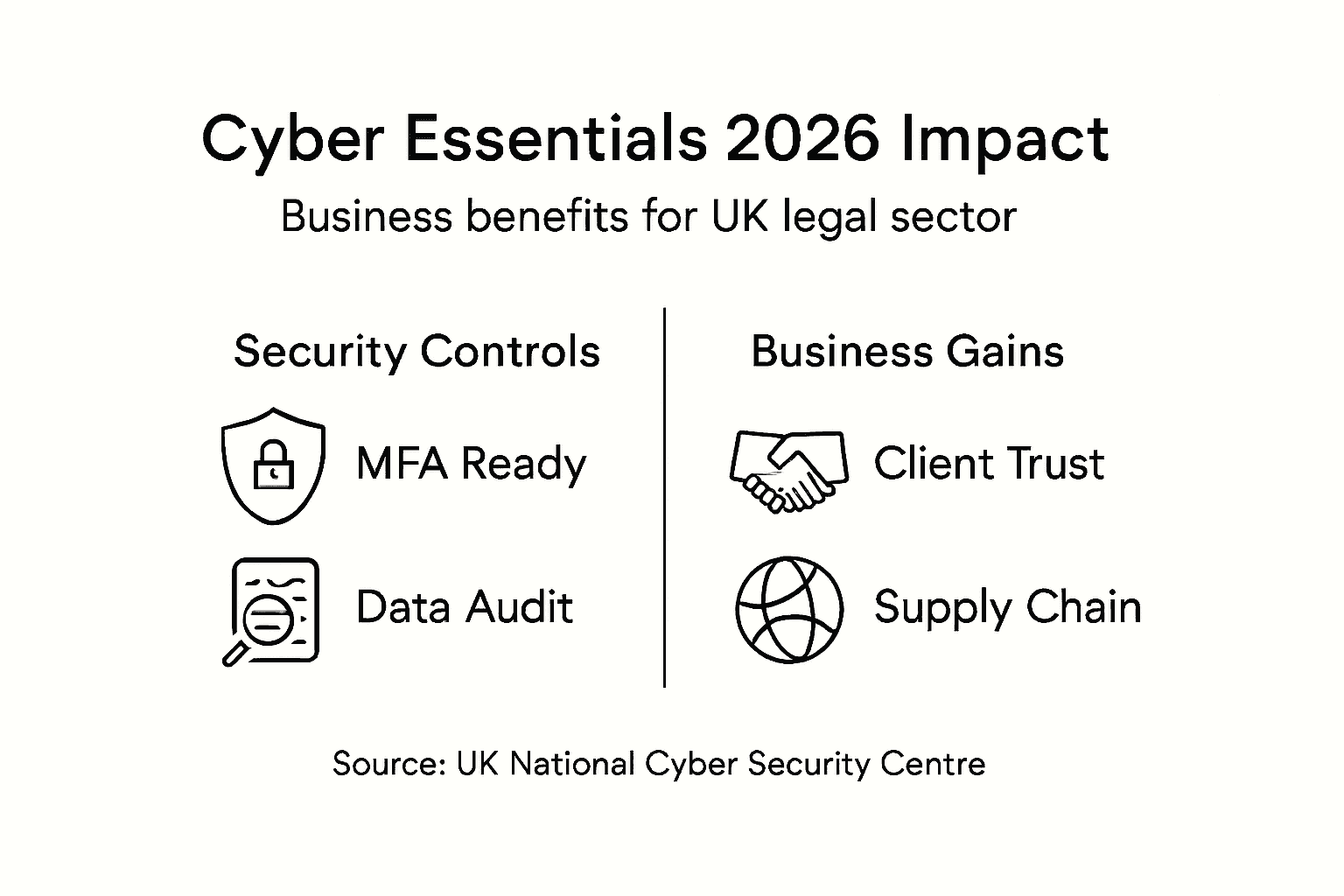
The certification’s impact extends beyond individual organisations, creating a ripple effect of enhanced security across interconnected business networks. By mandating baseline security standards, companies can collectively strengthen their digital resilience and reduce systemic vulnerabilities that could potentially compromise entire industry ecosystems.
Pro tip: Leverage your Cyber Essentials certification as a marketing differentiator, highlighting it in proposal documents and client communications to showcase your proactive approach to cybersecurity.
Risks of Non-Compliance and Common Pitfalls
Non-compliance with Cyber Essentials presents substantial risks for legal and financial sector organisations, extending far beyond simple regulatory penalties. Business preparedness for cybersecurity compliance demands a strategic and comprehensive approach to mitigating potential vulnerabilities.
Primary risks of non-compliance include:
Financial Consequences:
Potential contract disqualification
Increased cyber insurance premiums
Substantial regulatory fines
Loss of competitive tender opportunities
Operational Vulnerabilities:
Heightened cybersecurity breach risks
Compromised client data protection
Reputational damage
Potential business interruption
Many organisations falter by treating Cyber Essentials as a mere checkbox exercise, rather than a holistic security strategy. This approach leaves critical system configurations and policy gaps unaddressed, creating potential entry points for sophisticated cyber threats targeting legal and financial infrastructures.
The ramifications of non-compliance extend beyond immediate financial penalties, potentially undermining long-term business credibility and client trust. Legal and financial firms must recognise that cybersecurity certification is no longer optional but a fundamental requirement for maintaining professional integrity and competitive market positioning.
Pro tip: Conduct a comprehensive gap analysis at least six months before your certification deadline to systematically address potential compliance weaknesses.
Transform Your Cyber Essentials 2026 Journey Into Business Growth and Resilience
Facing the new Cyber Essentials requirements for the UK legal sector in 2026 brings challenges such as mandatory multi-factor authentication and stricter verification standards. These changes demand a strategic approach to compliance, risk management, and ongoing vulnerability monitoring. The pressure to move beyond a simple checkbox exercise is real. You need a partner who helps you embrace these mandatory demands as an opportunity to enhance your security posture while unlocking new contract opportunities.
At Freshcyber, our Cyber Essentials expertise and the innovative Compliance Currency Engine let you transform compliance into a powerful business asset. We provide more than just advice. Our vCISO-led approach takes full ownership of your cybersecurity roadmap including proactive Vulnerability Management and dynamic policy frameworks tailored for legal SMEs. With 24/7 MDR and real-time monitoring, your firm gains true resilience that clients and regulators demand.

Secure your place at the forefront of legal sector cybersecurity. Visit Freshcyber now to discover how our comprehensive solutions help you surpass 2026 Cyber Essentials requirements with confidence and scale your business with trust.
Frequently Asked Questions
What is Cyber Essentials and why is it important for legal firms?
Cyber Essentials is a cybersecurity framework that helps legal firms protect against common cyber threats. Achieving certification demonstrates a firm’s commitment to data security and can provide a competitive edge in contract bidding.
What are the key requirements for Cyber Essentials certification in 2026?
In 2026, Cyber Essentials certification will require mandatory multi-factor authentication, enhanced access control reviews, and more rigorous external verification to ensure robust cybersecurity practices are in place.
How does Cyber Essentials certification impact client trust?
Achieving Cyber Essentials certification serves as a strong trust signal to clients, showcasing a firm’s proactive approach to data protection and compliance with regulatory standards, thus enhancing client confidence.
What are the risks of non-compliance with Cyber Essentials in the legal sector?
Non-compliance can lead to significant financial consequences, operational vulnerabilities, reputational damage, and increased risks of cybersecurity breaches, which may undermine a firm’s credibility and competitive position.
Recommended
Comments