What Is Supply Chain Security and Why It Matters


Cyberattacks cost British businesses billions each year, and even small organisations are no exception. Securing every link in the supply chain has become a top priority for British SMEs facing complex digital threats. With vulnerabilities often hidden in everyday processes or overlooked vendor connections, understanding supply chain security matters more than ever. This guide sheds light on practical steps and core strategies so British companies can protect their critical assets and reputations in an unpredictable environment.
Table of Contents
Key Takeaways
Point | Details |
Importance of Supply Chain Security | SMEs must implement strategic measures to protect their operational ecosystems from digital and physical threats. |
Key Components | Effective supply chain security includes vendor risk assessments, security audits, multi-factor authentication, and continuous monitoring. |
Types of Threats | SMEs face various vulnerabilities such as cyber intrusions, insider threats, and data transmission risks that require robust proactive strategies. |
Regulatory Compliance | Adhering to UK legal frameworks, including ISO 27001 and the Data Protection Act, is vital for ensuring supply chain security and organisational integrity. |
Defining Supply Chain Security for SMEs
Supply chain security represents a comprehensive approach to protecting an organisation’s entire operational ecosystem from digital and physical risks. For small and medium-sized enterprises (SMEs), this means implementing strategic measures that safeguard critical assets, data pathways, and interconnected business relationships against potential cyber threats and vulnerabilities.
At its core, supply chain security involves managing and mitigating risks across every point of connection within a business network. This includes carefully vetting third-party vendors, monitoring digital interfaces, and establishing robust protocols that prevent potential breaches. Vulnerability scanning techniques play a crucial role in identifying potential weak points before they can be exploited by malicious actors.
Research from UK universities highlights the importance of developing comprehensive frameworks for information security management. Specific research from Brunel University emphasises the critical need for cybersecurity information sharing and developing precise metrics to manage supply chain risks. This approach recognises that in today’s interconnected business landscape, a vulnerability in one part of the supply chain can potentially compromise an entire organisation’s security infrastructure.
Key components of effective supply chain security for SMEs include:
Comprehensive vendor risk assessments
Regular security audits and vulnerability scanning
Implementing multi-factor authentication
Establishing clear security protocols and communication channels
Continuous monitoring and rapid incident response strategies
By adopting a proactive and holistic approach to supply chain security, SMEs can significantly reduce their risk exposure and build more resilient, trustworthy business ecosystems.
Types of Supply Chain Threats and Vulnerabilities
Supply chain threats are increasingly sophisticated and multifaceted, presenting significant challenges for SMEs across digital and physical security landscapes. These vulnerabilities can emerge from various sources, ranging from malicious cyberattacks to unintentional human errors that compromise organisational integrity.
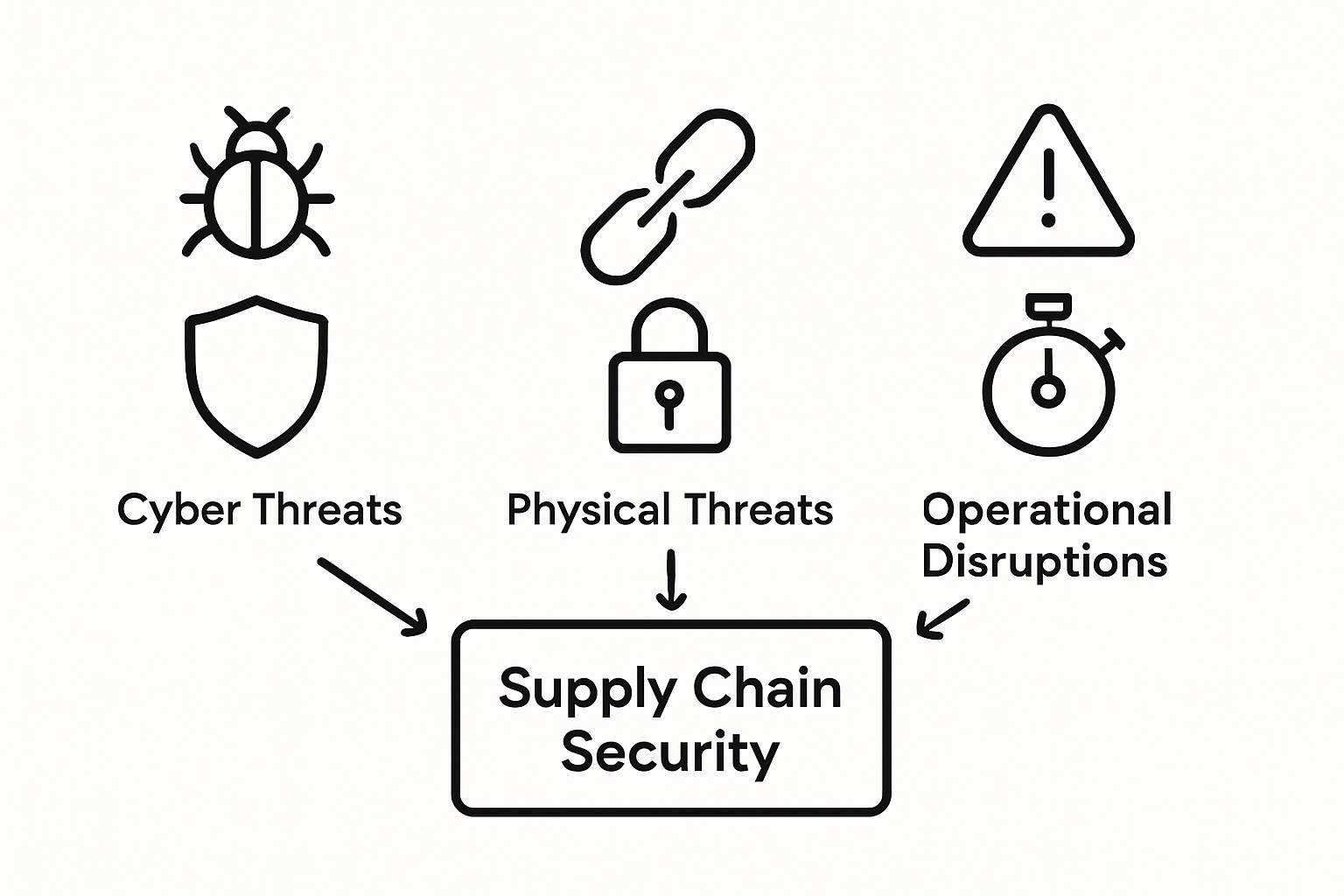
Digital threats represent a particularly complex risk category. Common security vulnerabilities often include external and internal network penetration points, such as compromised vendor credentials, unsecured software interfaces, and weak authentication mechanisms. Cybercriminals frequently target interconnected systems, exploiting the smallest security gaps to gain unauthorised access across entire supply chain networks.
Physical and operational vulnerabilities are equally critical. These can manifest through:
Inadequate vendor screening processes
Insufficient background checks for personnel with system access
Lack of secure data transmission protocols
Outdated hardware and software systems
Weak access control mechanisms
The most prevalent supply chain threat categories include:
Cyber Intrusion Risks: Malware, phishing attacks, and ransomware targeting interconnected business systems
Insider Threat Vulnerabilities: Potential security breaches from current or former employees
Third-Party Vendor Risks: Security gaps introduced through external service providers
Data Transmission Vulnerabilities: Unsecured communication channels and potential information leakage
Infrastructure Security Weaknesses: Obsolete technology and unpatched system vulnerabilities
By understanding these diverse threat landscapes, SMEs can develop more robust, proactive security strategies that anticipate and mitigate potential risks before they escalate into significant organisational challenges.
How Supply Chain Security Works in Practice
Implementing supply chain security is a strategic, multi-layered process that requires comprehensive planning and continuous monitoring. Vulnerability management best practices form the foundation of an effective approach, enabling organisations to proactively identify, assess, and mitigate potential security risks across their entire operational ecosystem.

The UK government’s guidance emphasises a systematic approach to building supply chain resilience. This involves conducting thorough risk assessments of all vendor relationships, implementing robust security controls, and developing detailed incident response plans. Critical steps include comprehensive vendor screening, establishing clear security requirements, and maintaining ongoing communication about potential vulnerabilities.
Practical implementation of supply chain security typically involves several key stages:
Conducting initial and continuous vendor risk assessments
Establishing clear security standards and contractual requirements
Implementing multi-factor authentication and access controls
Developing comprehensive incident response and communication protocols
Regularly monitoring and updating security measures
Technical implementation requires a holistic approach that encompasses:
Network Segmentation: Limiting access and potential breach impacts
Continuous Monitoring: Real-time tracking of potential security threats
Encryption Protocols: Securing data transmission and storage
Regular Security Audits: Identifying and addressing potential vulnerabilities
Collaborative Risk Management: Sharing threat intelligence with trusted partners
Successful supply chain security is not a one-time effort but a dynamic, ongoing process that requires constant vigilance, adaptability, and proactive risk management strategies.
Legal and Regulatory Requirements in the UK
Supply chain security in the United Kingdom is governed by a complex framework of legal and regulatory requirements that mandate rigorous protection of organisational assets and digital infrastructure. ISO 27001 compliance represents a critical foundation for businesses seeking to meet these comprehensive security standards and demonstrate their commitment to robust risk management.
The regulatory landscape includes several key legislative mechanisms. The Telecommunications (Security) Act 2021 represents a significant milestone, imposing stringent security duties on telecommunication providers and establishing clear requirements for identifying and mitigating network and service-related risks. This legislation underscores the UK’s proactive approach to protecting critical digital infrastructure.
Key regulatory compliance requirements for UK businesses include:
Adherence to Data Protection Act 2018 and UK GDPR
Compliance with Cyber Essentials certification standards
Implementing ISO 28000 supply chain security management protocols
Meeting sector-specific regulatory frameworks
Maintaining transparent security reporting mechanisms
Critical legal obligations for supply chain security encompass:
Data Protection: Ensuring comprehensive protection of personal and sensitive information
Risk Management: Developing systematic approaches to identifying and mitigating potential security vulnerabilities
Incident Reporting: Maintaining transparent communication channels for potential security breaches
Vendor Assessment: Conducting thorough due diligence on third-party service providers
Continuous Monitoring: Implementing ongoing security assessment and improvement processes
Navigating these regulatory requirements demands a proactive, comprehensive approach that integrates legal compliance with robust technological safeguards and strategic risk management practices.
Risks, Liabilities, and Business Implications
Supply chain security breaches can inflict devastating financial and reputational consequences for businesses, extending far beyond immediate monetary losses. Vulnerability management best practices are critical in mitigating these potentially catastrophic risks that can fundamentally compromise an organisation’s operational integrity and market standing.
Global supply chain disruptions represent complex risk scenarios that can emerge from multiple sources, including technological vulnerabilities, regulatory non-compliance, and unexpected external events. These disruptions can trigger cascading effects across entire business ecosystems, potentially leading to significant operational paralysis, financial penalties, and long-term reputational damage.
Potential business risks include:
Financial losses from security breaches
Legal penalties for non-compliance
Loss of customer trust and market reputation
Operational disruptions and productivity challenges
Potential contractual breaches with partners and clients
Critical liability dimensions encompass:
Direct Financial Liability: Potential monetary penalties and compensation claims
Regulatory Compliance Risks: Potential sanctions and legal enforcement actions
Contractual Obligations: Potential breach of service level agreements
Reputational Damage: Long-term impact on brand perception and market credibility
Operational Continuity: Potential disruptions to business processes and service delivery
Navigating these complex risk landscapes requires a strategic, proactive approach that integrates comprehensive risk assessment, continuous monitoring, and robust mitigation strategies tailored to an organisation’s specific operational context.
Strengthen Your Supply Chain Security with Freshcyber
Understanding the complexities of supply chain security is crucial for SMEs seeking to protect their operations against cyber threats and regulatory risks. This article highlights how vulnerabilities in vendor management, data transmission, and compliance can jeopardise your entire business ecosystem. At Freshcyber, we specialise in helping SMEs navigate these challenges through expert SME Security guidance and continuous Vulnerability Management services designed to identify and remediate risks before they escalate.

Take control of your supply chain security today by partnering with Freshcyber. Our UK-based consultancy simplifies Cyber Essentials certification and offers end-to-end support that keeps your organisation compliant year-round. Discover tailored solutions at freshcyber.co.uk and ensure your business is protected against the evolving threats outlined in this article. Act now to secure your business continuity and build lasting client trust.
Frequently Asked Questions
What is supply chain security?
Supply chain security is a comprehensive approach to protecting an organisation’s operational ecosystem from digital and physical risks. It involves managing and mitigating risks at every point of connection within a business network, including vendor assessments, monitoring digital interfaces, and establishing strong security protocols.
Why is supply chain security important for SMEs?
Supply chain security is crucial for small and medium-sized enterprises (SMEs) as it helps safeguard critical assets and business relationships against potential cyber threats and vulnerabilities. A breach in security can compromise the entire organisation’s infrastructure, resulting in significant financial and reputational damage.
What are common threats to supply chain security?
Common threats include cyber intrusion risks such as malware and phishing, insider threats from employees, vulnerabilities introduced by third-party vendors, unsecured data transmissions, and infrastructure weaknesses. Addressing these threats is vital for maintaining a secure supply chain.
How can SMEs implement effective supply chain security measures?
SMEs can implement effective supply chain security by conducting comprehensive vendor risk assessments, establishing clear security standards and communication protocols, using multi-factor authentication, and regularly monitoring and updating their security measures. Continuous vigilance is key to maintaining robust supply chain security.
Recommended
Comments