Role of Vulnerability Management for UK SMEs


More than half of British small businesses reported cyber attacks last year, highlighting just how real digital threats have become. For growing companies, a single vulnerability can lead to costly interruptions or erode customer trust overnight. Addressing these risks is not just smart planning but a necessity for any British owner hoping to protect their hard work. This guide explains how vulnerability management gives small businesses the upper hand against evolving cyber risks.
Table of Contents
Key Takeaways
Point | Details |
Importance of Vulnerability Management | A strategic, ongoing process is essential for SMEs to protect their digital infrastructure against security threats. |
Types of Vulnerabilities | SMEs face various vulnerabilities including software, network, and human-centric issues which require proactive management. |
Continuous Process | Vulnerability management must be a year-round commitment, involving regular scanning, risk assessment, and updating security practices. |
Consequences of Neglect | Ignoring vulnerabilities can lead to severe financial losses, reputational damage, and operational disruptions for SMEs. |
Defining Vulnerability Management for SMEs
Vulnerability management represents a strategic, continuous approach for small and medium enterprises to protect their digital infrastructure from potential security threats. At its core, this process involves systematically identifying digital system weaknesses before malicious actors can exploit them.
For UK small businesses, vulnerability management is not merely a technical exercise but a critical business resilience strategy. It encompasses several key activities:
Continuous scanning and assessment of network vulnerabilities
Prioritising discovered weaknesses based on potential business impact
Developing targeted remediation plans
Implementing security patches and configuration improvements
Tracking and documenting progress of security enhancements
The goal of vulnerability management goes beyond simply detecting potential risks. It represents a proactive methodology that transforms cybersecurity from a reactive constraint into a strategic business enabler. By systematically addressing potential weaknesses, SMEs can build robust digital defences that protect critical assets, maintain customer trust, and demonstrate professional risk management.
Implementing a structured vulnerability management programme allows businesses to stay ahead of emerging threats, reduce potential financial and reputational damage, and create a culture of ongoing security awareness. Small businesses are not immune to cybersecurity challenges - they are often more vulnerable precisely because they lack dedicated security resources.
Types of Vulnerabilities and Attack Vectors
Understanding the diverse landscape of cybersecurity vulnerabilities is crucial for UK small and medium enterprises seeking to protect their digital infrastructure. Emerging attack vectors represent sophisticated methods that malicious actors employ to compromise business systems and exploit potential weaknesses.
The most prevalent types of vulnerabilities SMEs encounter include:
Software Vulnerabilities
Unpatched system software
Outdated application versions
Misconfigured security settings
Network Vulnerabilities
Unsecured wireless networks
Weak firewall configurations
Inadequate network segmentation
Human-Centric Vulnerabilities
Phishing susceptibility
Weak password practices
Limited cybersecurity awareness
Phishing remains particularly dangerous, with cybercriminals increasingly targeting SMEs through sophisticated social engineering techniques. These attacks often exploit human psychology, tricking employees into revealing sensitive credentials or downloading malicious attachments.
Moreover, common security vulnerabilities can create significant risks for businesses that fail to implement comprehensive protection strategies. By understanding these attack vectors, SMEs can develop proactive defence mechanisms that significantly reduce their exposure to potential cyber threats.

How Vulnerability Management Works Year-Round
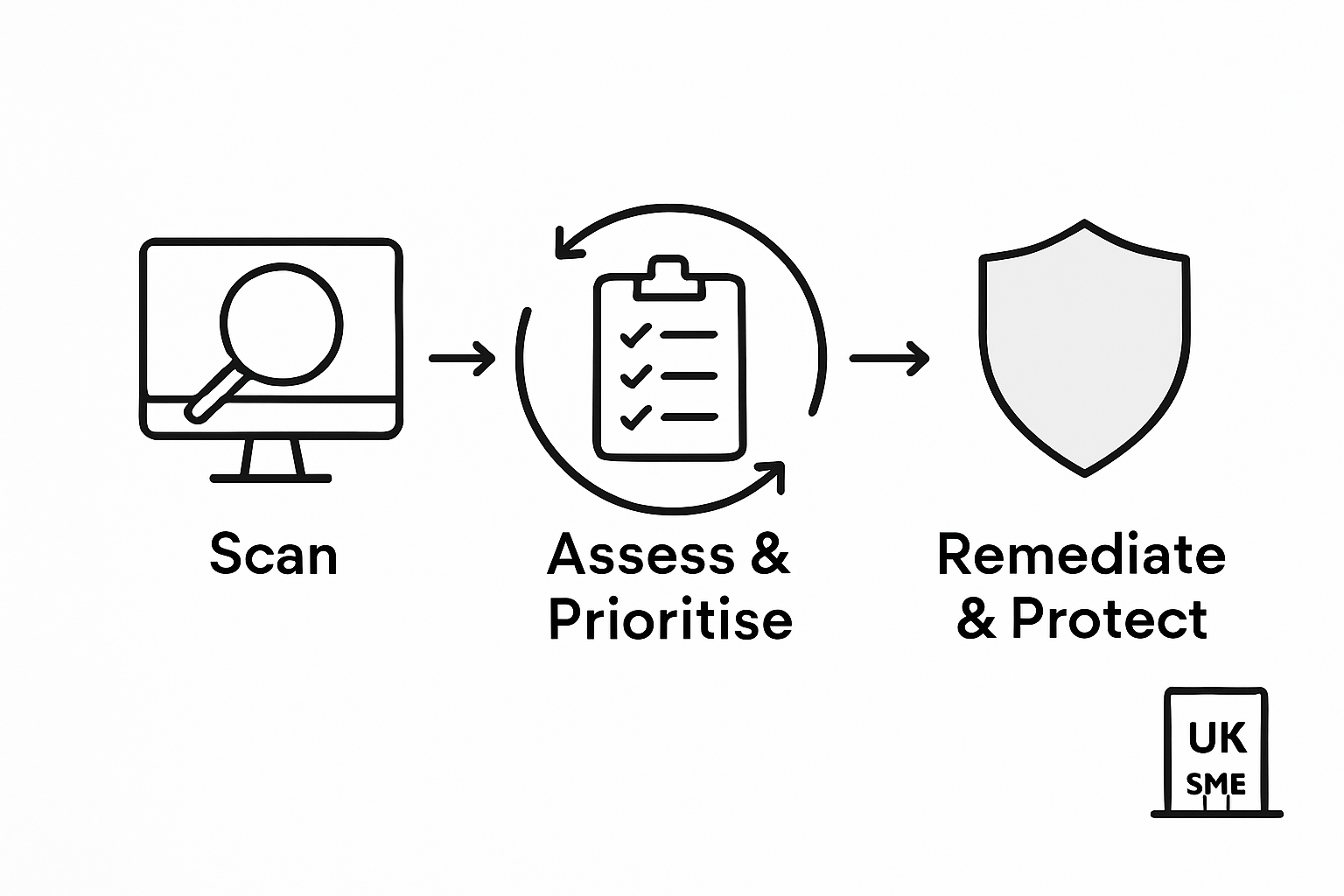
Vulnerability management is not a one-time event, but a continuous, strategic process that demands consistent attention and proactive monitoring. Implementing a comprehensive vulnerability management process requires organisations to systematically address potential security risks throughout their entire technology ecosystem.
The year-round vulnerability management lifecycle typically involves several critical stages:
Asset Discovery and Inventory
Identifying all digital assets and endpoints
Documenting hardware and software configurations
Creating a comprehensive technology landscape map
Continuous Vulnerability Scanning
Regular automated network and system scans
Identifying potential security weaknesses
Tracking emerging threats and vulnerabilities
Risk Assessment and Prioritisation
Evaluating discovered vulnerabilities
Scoring potential impact and likelihood
Ranking remediation efforts
Businesses must recognise that vulnerability management best practices demand ongoing commitment. Cybercriminals continuously evolve their techniques, meaning SMEs cannot afford to treat security as a static concern.
Ultimately, successful vulnerability management requires a proactive, adaptive approach. By integrating continuous scanning, thorough risk assessment, and swift remediation, organisations can build resilient digital defences that protect against an ever-changing threat landscape.
Compliance Drivers: Cyber Essentials and Beyond
Compliance frameworks have become increasingly critical for UK small and medium enterprises navigating the complex cybersecurity landscape. Government SME action plans emphasise robust risk management strategies that extend far beyond traditional security checkboxes.
Key compliance drivers for SMEs include:
Cyber Essentials Certification
Baseline security standard for UK businesses
Demonstrates commitment to cybersecurity
Mandatory for government contract eligibility
Industry-Specific Requirements
PCI DSS for payment processors
GDPR data protection standards
Financial sector regulatory compliance
Supply Chain Security
Increasing vendor security requirements
Proof of robust security practices
Competitive advantage in tendering
The Cyber Essentials framework provides a critical starting point for SMEs seeking to establish foundational cybersecurity standards. By implementing these guidelines, businesses can not only protect themselves but also demonstrate their commitment to security to clients, partners, and regulators.
Beyond basic compliance, progressive organisations recognise that these frameworks represent more than mere regulatory requirements. They are strategic tools for building trust, reducing risk, and creating a culture of continuous security improvement across the entire business ecosystem.
Risks and Consequences of Neglecting Vulnerabilities
Neglecting cybersecurity vulnerabilities can transform a minor technical oversight into a catastrophic business threat. Risk management failures in SMEs can rapidly escalate from isolated incidents to full-scale operational disasters, potentially threatening an entire organisation’s survival.
The most critical risks SMEs face include:
Financial Devastation
Direct monetary losses from breaches
Potential regulatory fines
Costs of system recovery and restoration
Reputational Damage
Loss of customer trust
Negative public perception
Potential long-term brand erosion
Operational Disruption
Extended system downtime
Interruption of business processes
Potential permanent data loss
Cybersecurity threats like malware and phishing pose significant risks that extend far beyond immediate technical challenges. Small businesses are particularly vulnerable because they often lack dedicated cybersecurity resources and sophisticated defence mechanisms.
Ultimately, vulnerability neglect is not just a technical problem but a strategic business risk. By understanding and proactively addressing potential security weaknesses, SMEs can transform cybersecurity from a potential liability into a competitive advantage, protecting their most valuable assets and maintaining business continuity.
Strengthen Your SME’s Cyber Defences with Trusted Vulnerability Management
UK SMEs face unique challenges in managing ongoing security risks and meeting compliance requirements like Cyber Essentials. This article highlights the importance of a continuous vulnerability management process to proactively detect and remediate threats before they disrupt your business or damage your reputation. If you struggle with limited resources, evolving cyber risks, or the pressure of achieving and maintaining compliance, Freshcyber offers practical, expert support tailored to your needs.

Explore our dedicated Vulnerability Management solutions designed for busy business owners and IT teams. We make navigating SME Security straightforward through clear guidance and hands-on services. Whether you want to effortlessly maintain Cyber Essentials certification or need full-service protection with our Cyber Elite programme, visit freshcyber.co.uk today and take the first step towards lasting peace of mind.
Frequently Asked Questions
What is vulnerability management?
Vulnerability management is a continuous process that involves identifying, assessing, and addressing security weaknesses in an organisation’s digital infrastructure to protect against potential cyber threats.
Why is vulnerability management important for SMEs?
Vulnerability management is crucial for SMEs as it helps protect critical assets, maintain customer trust, and reduce financial and reputational risks associated with cyber threats.
What steps are involved in the vulnerability management process?
The vulnerability management process typically includes asset discovery, continuous scanning for vulnerabilities, risk assessment, prioritisation of remediation efforts, and regular tracking of security enhancements.
What are the common types of vulnerabilities that SMEs face?
Common vulnerabilities include software vulnerabilities (like unpatched systems), network vulnerabilities (such as weak firewalls), and human-centric vulnerabilities (like phishing susceptibility and weak password practices).
Recommended
Comments