Cybersecurity Terms for Nonprofits – Protecting Data and Trust
- Gary Sinnott

- Jan 15
- 7 min read

Nearly one in five British nonprofits have faced a cyberattack in the past year, making digital security impossible to ignore. Directors and Compliance Officers know that unfamiliar cybersecurity terms can slow down decision making and put organisational data at risk. Gaining clarity on common terms not only strengthens your defence strategy but also helps your nonprofit stay compliant with strict British regulations and maintain trust with funders and stakeholders.
Table of Contents
Key Takeaways
Point | Details |
Core Cybersecurity Terms | Nonprofits should understand key cybersecurity concepts such as phishing, ransomware, and credential security to effectively protect sensitive data. |
Compliance Frameworks | Familiarity with frameworks like GDPR, ISO 27001, and Cyber Essentials is essential for ensuring data protection and aligning with regulatory requirements. |
Proactive Training and Planning | Regular staff training and the implementation of incident response plans are crucial in building resilience and preparing for potential cyber threats. |
Ongoing Risk Management | Establishing a culture of cybersecurity awareness and maintaining a dynamic risk register helps nonprofits proactively address emerging threats. |
Core Cybersecurity Terms Every Nonprofit Needs
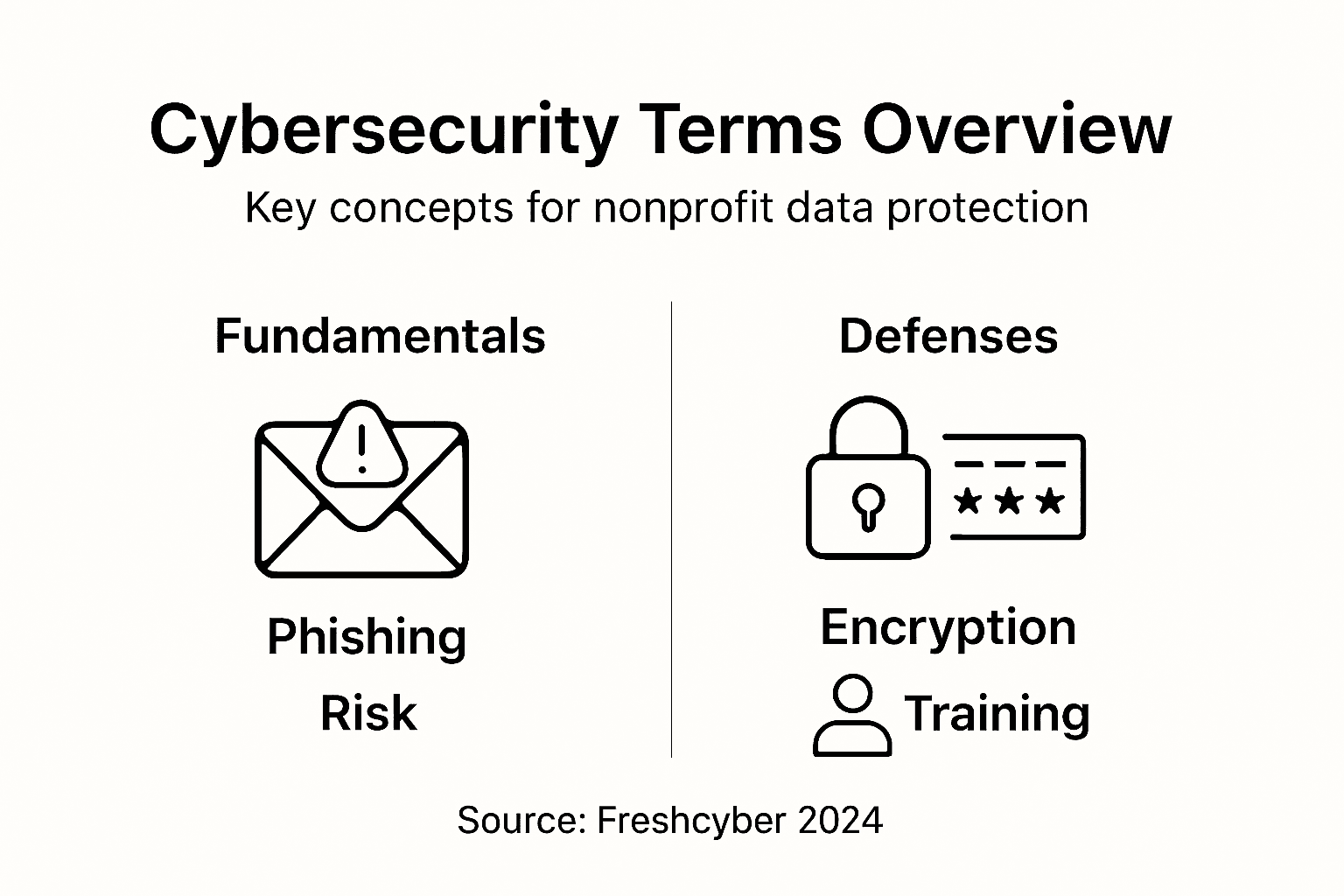
Understanding fundamental cybersecurity terminology is crucial for nonprofit organisations to protect sensitive data and maintain stakeholder trust. Every team member, from directors to frontline staff, needs a baseline comprehension of key digital security concepts to create a robust defensive strategy. Cyber security terminology provides the foundational knowledge necessary for effective digital risk management.
Nonprofits must be familiar with several core cybersecurity terms that directly impact their operational security. Phishing represents fraudulent attempts to obtain sensitive information by disguising as trustworthy communications, typically through email. Ransomware involves malicious software that encrypts an organisation’s data, demanding payment for restoration. Credential security focuses on protecting login information, ensuring that passwords and access credentials remain secure and uncompromised.
Risk management in cybersecurity involves identifying potential vulnerabilities and implementing strategic defences. Vulnerability scanning for nonprofits helps organisations proactively detect potential weaknesses in their digital infrastructure. Key additional terms include multi-factor authentication (requiring multiple verification steps for access), endpoint protection (securing individual devices connected to networks), and incident response (structured approach to managing and mitigating security breaches).
Practical Cybersecurity Tip: Conduct regular team training sessions to ensure all staff understand these fundamental cybersecurity terms and can recognise potential digital threats in their daily operations.
Here’s a quick reference table for essential cybersecurity terms and their organisational impact:
Term | What It Means | Impact for Nonprofits |
Phishing | Deceptive emails to obtain sensitive information | Credibility loss, risk of data theft |
Ransomware | Software encrypts data, demands payment | Disrupted operations, financial harm |
Credential Security | Protection of passwords and access credentials | Prevents unauthorised system access |
Multi-factor Auth. | Multiple steps to verify user identity | Adds extra layer of security |
Endpoint Protection | Safeguarding individual devices | Reduces likelihood of device breaches |
Incident Response | Structured plan for managing breaches | Minimises damage from attacks |
Key Frameworks: GDPR, ISO 27001, Cyber Essentials
Nonprofit organisations operate in an increasingly complex digital landscape, requiring robust cybersecurity frameworks to protect sensitive data and maintain stakeholder trust. Key compliance frameworks provide structured approaches to managing digital risks and ensuring comprehensive data protection across organisational operations.
The General Data Protection Regulation (GDPR) represents a critical framework for nonprofits processing personal data within the United Kingdom. UK data protection legislation mandates that organisations implement strict protocols around data collection, storage, and processing. Key GDPR principles include lawful data processing, ensuring data minimisation, protecting individual privacy rights, and maintaining transparent communication about data usage.
ISO 27001 provides an internationally recognised standard for information security management systems. This framework helps nonprofits establish systematic approaches to managing sensitive information, identifying potential vulnerabilities, and implementing comprehensive security controls. Cyber Essentials, a government-backed certification scheme, complements these efforts by focusing on fundamental technical controls that mitigate common cybersecurity risks. These frameworks collectively enable nonprofits to build resilient digital infrastructures that protect both organisational and donor data.
Practical Security Framework Tip: Conduct an annual comprehensive review of your organisation’s compliance with GDPR, ISO 27001, and Cyber Essentials to ensure ongoing alignment with the latest cybersecurity best practices and regulatory requirements.
The following table compares three key cybersecurity frameworks relevant to UK nonprofits:
Framework | Focus Area | Main Benefit | Typical Requirements |
GDPR | Data protection and privacy | Ensures lawful processing | Privacy notices, assessments |
ISO 27001 | Info security management | Structured risk management | Audits, documented controls |
Cyber Essentials | Basic technical controls | Certification, baseline defence | Patch management, access rules |
Common Threats: Phishing, Ransomware, Data Breach
Cybersecurity threats pose significant risks for nonprofit organisations, requiring comprehensive understanding and proactive defence strategies. Common cyber threats continue to evolve, targeting vulnerable digital infrastructures and exploiting organisational weaknesses with increasingly sophisticated techniques.
Phishing represents a particularly insidious threat, involving malicious actors creating deceptive communications designed to trick staff into revealing sensitive credentials or downloading harmful software. These attacks often masquerade as legitimate emails from trusted sources, using psychological manipulation to bypass traditional security barriers. Nonprofit teams must develop robust training programmes that teach employees to recognise suspicious communication patterns, verify sender authenticity, and implement strict verification protocols before responding to or acting on unexpected digital requests.

Ransomware and data breaches constitute equally dangerous cybersecurity challenges for nonprofits. Ransomware involves malicious software that encrypts organisational data, demanding financial payment for restoration, while data breaches expose sensitive information, potentially compromising donor details, financial records, and strategic plans. These incidents can result in devastating financial losses, reputational damage, and potential legal consequences. Implementing comprehensive security measures, including regular system backups, multi-factor authentication, and advanced threat detection mechanisms, becomes crucial for maintaining organisational resilience.
Practical Defence Tip: Develop a comprehensive cybersecurity response plan that includes immediate isolation protocols, communication strategies, and systematic recovery procedures to minimise potential damage from cyber incidents.
Essential Compliance for UK Nonprofits
UK nonprofits face increasingly complex cybersecurity compliance requirements that demand strategic and comprehensive approaches to data protection. UK cyber security regulations continue to evolve, requiring organisations to maintain rigorous standards of digital security and information management.
The Information Commissioner’s Office (ICO) provides definitive guidance for nonprofits navigating data protection compliance. Key requirements include conducting thorough data protection impact assessments, establishing clear protocols for managing subject access requests, and developing robust mechanisms for reporting potential data breaches. Nonprofits must appoint dedicated data protection officers responsible for overseeing compliance strategies, ensuring that organisational practices align with the stringent UK General Data Protection Regulation (GDPR) framework.
Comprehensive compliance extends beyond documentation to include practical cybersecurity measures. This involves implementing strong password policies, conducting regular staff training on cyber awareness, managing digital asset inventories, and establishing secure protocols for third-party supplier interactions. Nonprofits must develop systematic approaches to identifying, assessing, and mitigating potential security vulnerabilities, creating a culture of proactive risk management that protects sensitive donor and organisational information.
Practical Compliance Tip: Create a comprehensive compliance checklist that is reviewed quarterly, ensuring all cybersecurity protocols remain current and aligned with the latest regulatory requirements.
Avoiding Pitfalls and Building Lasting Resilience
Cybersecurity resilience for nonprofits requires strategic planning and proactive risk management. Cyber resilience strategies demand comprehensive approaches that anticipate potential vulnerabilities and develop robust defensive mechanisms well before potential threats emerge.
One critical aspect of building organisational resilience involves developing comprehensive incident response plans that outline precise protocols for managing potential cybersecurity breaches. These plans must go beyond theoretical documentation, incorporating practical scenarios that simulate real-world attack vectors. Nonprofits should conduct regular tabletop exercises that test staff readiness, communication protocols, and systemic response capabilities, ensuring that every team member understands their specific role during a potential cybersecurity incident.
Effective resilience also requires continuous learning and adaptive strategies. This means establishing robust mechanisms for ongoing threat intelligence gathering, regularly updating security infrastructure, and maintaining a dynamic risk register that evolves with emerging digital challenges. Nonprofits must cultivate a culture of cybersecurity awareness that empowers staff to become active participants in organisational defence, transforming traditional security approaches from reactive measures to proactive, intelligence-driven strategies.
Practical Resilience Tip: Implement a quarterly cybersecurity simulation programme that tests and refines your organisation’s incident response capabilities, ensuring your team remains prepared and adaptable.
Strengthen Your Nonprofit’s Cybersecurity with Expert Support
Nonprofit organisations face growing digital risks that threaten sensitive donor data and operational trust. Understanding cybersecurity terms like phishing, ransomware, and incident response is essential but only the first step. Addressing these challenges requires a strategic approach to compliance, vulnerability management, and continuous risk mitigation. Key pain points include navigating complex frameworks such as GDPR and ISO 27001 and building resilient defences against evolving cyber threats.
Freshcyber’s tailored Virtual CISO (vCISO) service provides nonprofits with executive-level cybersecurity leadership typically reserved for large organisations. From guiding compliance aligned with Compliance frameworks to conducting thorough assessments under Vulnerability Management, we become your dedicated partner in navigating these challenges. Our proactive strategies, comprehensive risk registers, and incident response planning ensure your nonprofit moves beyond awareness to true digital resilience.

Protect your mission and stakeholder trust today. Connect with Freshcyber at https://freshcyber.co.uk to explore how our expert SME Security solutions can fortify your organisation’s cybersecurity posture and ensure long-term success in an uncertain digital world.
Frequently Asked Questions
What is phishing and how does it affect nonprofits?
Phishing is a fraudulent attempt to obtain sensitive information by disguising as a trustworthy source, often through email. For nonprofits, falling victim to phishing can lead to data theft and a loss of credibility, jeopardising stakeholder trust.
How can nonprofits protect against ransomware attacks?
Nonprofits can protect against ransomware by implementing strong cybersecurity measures such as regular data backups, multi-factor authentication, and employee training on recognising suspicious activity. This helps mitigate the risk of data loss and financial extortion.
Why is credential security important for nonprofits?
Credential security is vital for nonprofits as it protects login information, ensuring that passwords and access credentials remain secure. This helps prevent unauthorised access to sensitive data and systems, safeguarding both organisational and donor information.
What frameworks should nonprofits consider for cybersecurity compliance?
Nonprofits should consider frameworks such as the General Data Protection Regulation (GDPR), ISO 27001, and Cyber Essentials. These frameworks provide a structured approach to managing data protection and security, helping organisations comply with legal standards and protect sensitive information.
Recommended
Comments