Cybersecurity in Payment Processing – Key Protection for UK SMEs


Keeping customer payment data secure can feel like an ongoing test for UK retail SMEs grappling with PCI DSS 4.0.1 demands. Regulatory expectations keep shifting, while threats loom at every touchpoint in the payment process. For those charged with safeguarding cardholder information and maintaining GDPR compliance, gaining expert support from a vCISO can provide clarity and confidence. Here, discover how layered cybersecurity strategies protect your entire payment ecosystem and what practical steps enable genuine resilience, not just box-ticking compliance.
Table of Contents
Key Takeaways
Point | Details |
Cybersecurity Strategy | Effective cybersecurity in payment processing requires a multi-layered approach, incorporating both technical and operational safeguards to protect sensitive financial data. |
Regulatory Compliance | Maintaining compliance with the Payment Card Industry Data Security Standard (PCI DSS) and other UK regulations is essential for securing payment data and preventing financial fraud. |
Holistic Security Measures | A resilient payment environment mandates a combination of advanced technology, continuous risk assessments, and comprehensive employee training for effective protection against cyber threats. |
Proactive Risk Management | Businesses must adopt a dynamic approach to cybersecurity, focusing on regular vulnerability assessments, robust incident response plans, and ongoing education to mitigate potential risks. |
Defining cybersecurity in payment processing
Cybersecurity in payment processing represents a comprehensive strategy to protect sensitive financial data throughout digital transactions. Unlike generic security approaches, this specialised discipline focuses exclusively on safeguarding payment account information from potential cyber threats.
The Payment Card Industry Security Standards define payment processing cybersecurity as a multi-layered approach encompassing technical and operational requirements. These standards address the entire payment ecosystem, protecting data across multiple touchpoints:
Merchant systems where initial transactions occur
Payment gateways transmitting financial information
Service provider networks processing transaction data
Financial institution infrastructure storing and managing payment records
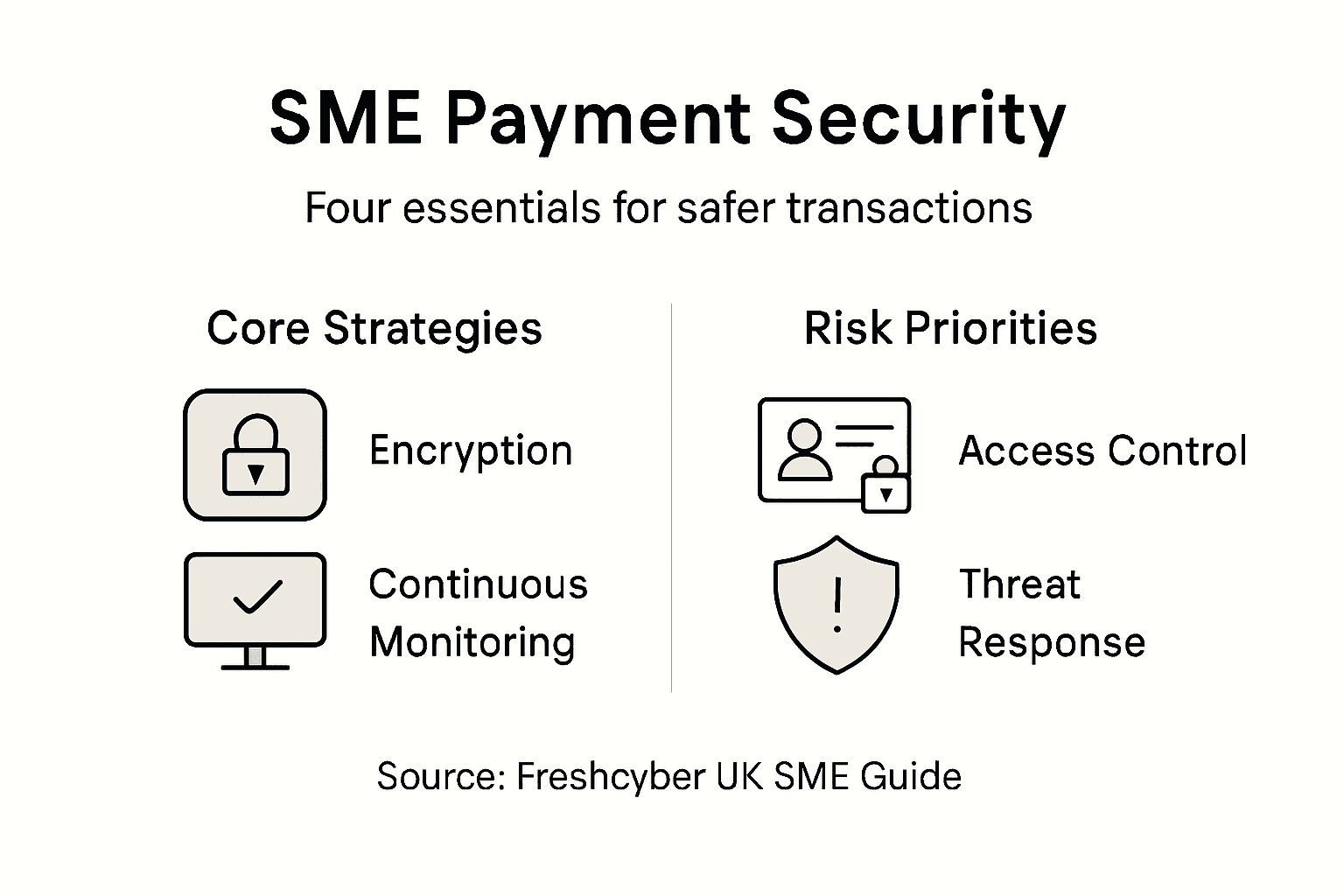
Effective cybersecurity in payment processing involves sophisticated protection mechanisms designed to prevent unauthorized access, data breaches, and financial fraud. These mechanisms include:
Encryption of payment data during transmission
Multi-factor authentication protocols
Continuous network monitoring
Real-time threat detection systems
Secure tokenization of sensitive information
Comprehensive protection requires understanding that cybersecurity is not a static concept but a dynamic, evolving discipline. Businesses must continuously adapt their strategies to address emerging technological vulnerabilities and sophisticated cyber threats.
Pro tip: Regularly conduct comprehensive security audits and stay updated with the latest Payment Card Industry Data Security Standard (PCI DSS) requirements to maintain robust payment processing cybersecurity.
Payment methods and security approaches
Payment processing has evolved dramatically, with digital technologies transforming how businesses and consumers manage financial transactions. Global payment systems now encompass a wide range of methods, each requiring sophisticated security approaches to protect sensitive financial data.
Modern payment methods include multiple technologies, each with unique security considerations:
The following table highlights how different payment methods require distinct security approaches:
Payment Method | Unique Security Challenge | Best Practice Example |
Credit/Debit Cards | Card cloning risk | EMV chip technology |
Mobile Payment Platforms | Device malware exposure | App whitelisting |
Digital Wallets | Account takeover attempts | Biometric authentication |
Bank Transfers | Interbank fraud | Transaction monitoring |
Contactless Payments | Skimming attacks | Tokenisation |
Credit and debit card transactions
Mobile payment platforms
Digital wallets
Bank transfer systems
Contactless payment technologies
The PCI Security Standards Council outlines comprehensive security protocols for different payment channels. These protocols address various transaction types, including:
Card-present transactions (in-store purchases)
Card-not-present transactions (online and telephone payments)
Mobile and contactless payment methods
Encryption plays a critical role in securing these transactions. Advanced cryptographic techniques protect financial data during transmission, ensuring that sensitive information remains confidential and protected from potential cyber threats.
Businesses must implement multi-layered security approaches that combine technological safeguards with robust compliance frameworks. This includes:
Strong access control mechanisms
Real-time transaction monitoring
Advanced fraud detection systems
Regular security audits and vulnerability assessments
Effective payment security requires a holistic approach that anticipates and mitigates potential risks across all transaction channels.
Pro tip: Implement a comprehensive security strategy that goes beyond basic compliance, focusing on continuous monitoring and adaptive protection mechanisms for all payment processing systems.
PCI DSS and UK regulatory landscape
The UK’s payment processing cybersecurity framework is underpinned by comprehensive regulatory standards that protect businesses and consumers alike. Global financial cybersecurity regulations have evolved to create robust defence mechanisms against increasingly sophisticated cyber threats.
The Payment Card Industry Data Security Standard (PCI DSS) serves as the cornerstone of payment security in the United Kingdom, establishing critical requirements for organisations handling cardholder data:
Maintaining secure network infrastructures
Protecting cardholder data through advanced encryption
Implementing robust access control mechanisms
Regularly monitoring and testing network security
Developing comprehensive information security policies
Key regulatory frameworks that intersect with PCI DSS compliance include:
Here’s a summary of major UK payment security regulations and their focus:
Regulation | Primary Focus | Applies To |
PCI DSS | Cardholder data protection | Merchants & payment processors |
UK GDPR | Personal data privacy | All data-handling organisations |
FCA Guidelines | Operational resilience | Financial firms |
NIS Regulations | Network/system security | Critical infrastructure operators |
UK General Data Protection Regulation (GDPR)
Payment Services Regulations
Financial Conduct Authority (FCA) Guidelines
Network and Information Systems (NIS) Regulations
UK financial institutions and payment processors must navigate a complex landscape of interconnected regulatory requirements. This demands a holistic approach that goes beyond mere checkbox compliance, focusing instead on creating genuine, adaptive cybersecurity strategies.
Effective regulatory compliance requires continuous adaptation and proactive security measures, not just meeting minimum standards.
Businesses must develop comprehensive strategies that integrate multiple layers of protection, including:
Technical security controls
Regular vulnerability assessments
Ongoing staff training
Incident response planning
Third-party risk management
Pro tip: Treat regulatory compliance as a continuous journey of improvement, not a one-time achievement, by implementing dynamic security frameworks that evolve with emerging threats.
Building a resilient payment environment
Creating a robust payment processing ecosystem requires a strategic approach that goes beyond traditional security measures. Cybersecurity best practices demand a comprehensive framework that anticipates and mitigates potential vulnerabilities across multiple dimensions of payment infrastructure.
Key components of a resilient payment environment include:
Continuous risk assessment
Advanced threat detection systems
Adaptive security protocols
Comprehensive employee training
Robust incident response mechanisms
Technical safeguards form the foundation of a secure payment ecosystem. Organisations must implement multiple layers of protection:
Network segmentation to isolate payment systems
Advanced encryption technologies
Multi-factor authentication
Real-time transaction monitoring
Automated threat intelligence integration
Operational resilience involves more than just technological solutions. It requires a holistic approach that combines technical controls with strategic management practices:
Developing comprehensive security policies
Creating clear communication protocols
Establishing rapid incident response procedures
Maintaining regular security awareness training
Implementing continuous improvement frameworks
A resilient payment environment is not about perfect protection, but about rapid detection, swift response, and continuous adaptation.
Businesses must view cybersecurity as a dynamic, evolving discipline that requires constant vigilance and proactive strategy. This means moving beyond compliance checklists and developing adaptive security frameworks that can respond quickly to emerging threats.

Pro tip: Conduct quarterly comprehensive security assessments and simulate potential cyber incidents to identify and address vulnerabilities before they can be exploited.
Managing cyber risks and common mistakes
Cybersecurity in payment processing demands a proactive and strategic approach to identifying and mitigating potential vulnerabilities. PCI Security Standards highlight critical errors that frequently compromise payment system integrity and expose businesses to significant financial and reputational risks.
The most prevalent cybersecurity mistakes in payment processing include:
Inadequate encryption of sensitive payment data
Insufficient access control mechanisms
Lack of regular security vulnerability assessments
Poor employee cybersecurity training
Neglecting multi-factor authentication
Inconsistent patch management
Risk management requires a comprehensive strategy that addresses multiple dimensions of potential threats:
Conduct thorough risk assessments
Implement robust security controls
Develop comprehensive incident response plans
Maintain continuous staff cybersecurity education
Regularly update security infrastructure
Specific technical vulnerabilities that businesses must address include:
Unsecured network configurations
Weak authentication protocols
Outdated software systems
Inadequate data protection mechanisms
Insufficient monitoring and logging capabilities
Effective cyber risk management is not about eliminating all risks, but about understanding, prioritising, and mitigating potential threats systematically.
Businesses must adopt a dynamic approach to cybersecurity that evolves with emerging threats. This requires ongoing investment in technology, training, and strategic risk management frameworks that anticipate and neutralise potential security challenges.
Pro tip: Implement a quarterly comprehensive security review process that includes penetration testing, vulnerability scanning, and staff training to proactively identify and address potential cyber risks.
Strengthen Your SME’s Payment Security with Expert Cyber Leadership
The complexity of safeguarding payment processing for UK SMEs requires more than just basic compliance. This article highlights critical challenges such as data encryption, ongoing vulnerability assessments, and regulatory demands like PCI DSS. If you want to move beyond ticking boxes and truly protect your business from evolving cyber threats, strategic leadership and proactive risk management are essential.
Freshcyber offers dedicated support through our flagship Virtual CISO (vCISO) service, providing executive-level cybersecurity strategy tailored for SMEs. Our approach includes comprehensive gap analysis, dynamic risk registers, and compliance leadership to keep you ahead of emerging threats. Complement this with our specialised Vulnerability Management solutions to identify and remediate hidden weaknesses before they become breaches.

Take control of your payment security today by partnering with Freshcyber. Explore our expert guidance on Compliance and dedicated SME cyber solutions to build a resilient defence that adapts as threats evolve. Visit Freshcyber now and secure your SME’s future with confidence.
Frequently Asked Questions
What is cybersecurity in payment processing?
Cybersecurity in payment processing is a strategy designed to protect sensitive financial information during digital transactions. It focuses on safeguarding payment account details from cyber threats through various security measures and protocols.
Why is PCI DSS important for payment processing?
The Payment Card Industry Data Security Standard (PCI DSS) is crucial because it establishes essential security requirements for organisations that handle cardholder data. Compliance with PCI DSS ensures that businesses implement robust safeguards, protecting against data breaches and fraud.
What are the common cybersecurity mistakes in payment processing?
Common mistakes include inadequate encryption of sensitive data, insufficient access controls, and neglecting multi-factor authentication. These errors can expose businesses to financial and reputational risks.
How can SMEs build a resilient payment environment?
SMEs can create a resilient payment environment by implementing continuous risk assessments, advanced threat detection, robust incident response mechanisms, and comprehensive employee training to enhance overall cybersecurity awareness.
Recommended
Comments