Cyber Hygiene in Business – Protecting UK SMEs


Nearly half of British SMEs experienced a cyber incident last year, yet many directors still underestimate basic security risks. For financial and healthcare firms, protecting sensitive data and meeting UK compliance goes far beyond ticking a box - it directly affects contract wins and client trust. Understanding how strong cyber hygiene forms the backbone of operational resilience, this article gives concrete steps to help British leaders reduce risk exposure and safeguard their most valuable assets.
Table of Contents
Key Takeaways
Point | Details |
Establish Cyber Hygiene | SMEs should adopt systematic cyber hygiene practices to protect their digital assets and minimise vulnerabilities. |
Ongoing Risk Management | Cyber hygiene requires continuous monitoring and regular updating of security protocols to combat evolving threats. |
Legal Compliance | Understanding and adhering to UK cybersecurity regulations is essential for avoiding penalties and ensuring robust digital governance. |
Cultural Shift | Building a resilient cybersecurity culture involves integrating security into daily operations and encouraging employee engagement in protecting the organisation. |
Cyber Hygiene Defined in the Modern SME
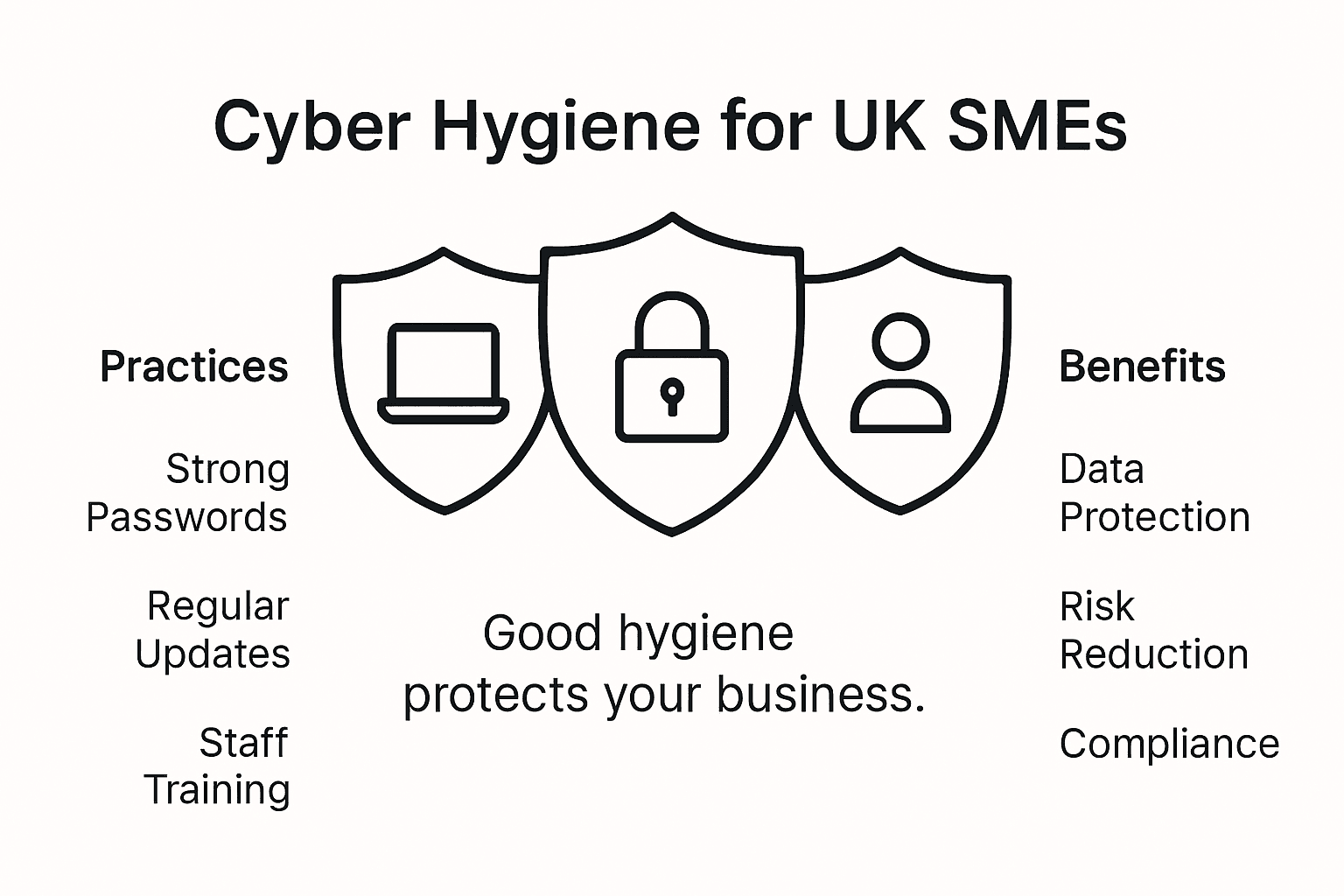
Cyber hygiene represents the comprehensive set of strategic practices and proactive measures small and medium enterprises (SMEs) implement to protect their digital infrastructure, data assets, and operational continuity. Unlike generic security approaches, cyber hygiene in modern UK businesses involves systematic, routine actions designed to minimise vulnerability and reduce potential cyber risk exposure.
At its core, cyber hygiene encompasses a range of deliberate technical and organisational practices that establish fundamental security protocols for SMEs. These practices include maintaining updated software, implementing robust password management, controlling network access, conducting regular security assessments, and training personnel about potential digital threats. The Association of British Insurers (ABI) emphasises that effective cyber hygiene is not a one-time event but an ongoing commitment to protecting business digital ecosystems.
For UK SMEs, cyber hygiene involves developing a structured approach to managing digital risks. This means creating clear security policies, understanding potential vulnerabilities, and implementing layered defensive strategies. Key elements include network segmentation, endpoint protection, secure configuration management, and continuous monitoring of digital environments. By treating cyber hygiene as a strategic business function rather than a technical afterthought, organisations can significantly reduce their potential attack surface and build resilience against evolving cyber threats.
The following table summarises the impact of core cyber hygiene elements on SME business resilience:
Cyber Hygiene Element | Primary Business Benefit | Typical Risk Reduced |
Network Segmentation | Limits unauthorised lateral movement | Reduces impact of breaches |
Endpoint Protection | Shields devices from malware | Prevents data leakage |
Secure Configuration | Minimises exploitable settings | Lowers chance of system exposure |
Regular Staff Training | Builds awareness of digital threats | Reduces human error incidents |
Expert Tip: Conduct a quarterly cyber hygiene audit to systematically review and update your organisation’s digital security practices and identify potential vulnerabilities before they become critical risks.
Common Types of Cyber Hygiene Practices
Cyber hygiene practices are the foundational strategies that UK SMEs deploy to protect their digital infrastructure, mitigate potential security risks, and maintain robust organisational resilience. Comprehensive cyber hygiene protocols encompass a range of systematic approaches designed to prevent, detect, and respond to potential digital threats across an organisation’s technological ecosystem.
The National Cyber Security Centre identifies several critical cyber hygiene practices that are essential for SMEs. These include maintaining updated software and operating systems, implementing strong password management protocols, configuring secure network access controls, conducting regular vulnerability assessments, and developing comprehensive staff awareness training programmes. Key practices involve protecting against malware, securing mobile devices, preventing phishing attempts, and establishing robust data backup procedures.
A structured approach to cyber hygiene requires SMEs to implement multi-layered defensive strategies. This involves creating clear security policies, understanding potential vulnerabilities, and developing systematic processes for monitoring and responding to digital risks. Specific practices include network segmentation, endpoint protection, secure configuration management, continuous security monitoring, and establishing incident response frameworks. By treating cyber hygiene as a strategic business function, organisations can systematically reduce their potential attack surface and build sustainable digital resilience.
Expert Tip: Develop a quarterly cyber hygiene checklist that systematically reviews and updates your organisation’s digital security practices, ensuring continuous improvement and proactive risk management.
How Cyber Hygiene Safeguards Business Assets
Cyber hygiene represents a critical shield protecting an organisation’s most valuable digital and financial resources from increasingly sophisticated cyber threats. Empirical research demonstrates how proactive asset protection strategies can significantly reduce vulnerability and mitigate potential financial and reputational damages for UK small and medium enterprises.
The National Cyber Security Centre highlights that comprehensive cyber hygiene practices directly safeguard multiple categories of business assets. These include protecting digital infrastructure, customer databases, intellectual property, financial records, and organisational reputation. By implementing robust technical controls, conducting regular risk assessments, and developing employee awareness programmes, SMEs can create multi-layered defensive mechanisms that prevent unauthorized access, data breaches, and potential financial losses.
Beyond technical protection, cyber hygiene encompasses strategic risk management that preserves business continuity and client trust. This involves identifying potential vulnerabilities, establishing clear security policies, implementing access controls, maintaining updated systems, and creating incident response frameworks. By treating cybersecurity as a dynamic, ongoing process rather than a static checklist, organisations can adapt to emerging threats and maintain the integrity of their critical business assets.
Expert Tip: Conduct a comprehensive asset inventory that maps out all digital resources, their potential vulnerabilities, and associated risk levels to prioritise your cyber hygiene investments effectively.
Legal Obligations and UK Compliance Requirements
UK SMEs face a complex landscape of legal obligations and compliance requirements that demand proactive cyber governance and risk management. The Cyber Governance Code of Practice establishes clear frameworks that boards and directors must follow to meet their statutory responsibilities for managing digital risks effectively.
Cybersecurity laws in the United Kingdom impose multiple mandatory requirements across various regulations, including the General Data Protection Regulation (GDPR), Data Protection Act 2018, and Network and Information Systems (NIS) Regulations. These legal frameworks mandate specific actions such as conducting regular risk assessments, implementing robust technical controls, maintaining comprehensive data protection protocols, and establishing timely breach reporting mechanisms. Organisations must demonstrate due diligence in protecting sensitive information and maintaining transparent cybersecurity practices.
Compliance is not merely a box-ticking exercise but a strategic approach to risk management. Directors have legal responsibilities to protect their organisation’s digital assets, which include understanding potential vulnerabilities, developing comprehensive security policies, training employees, and maintaining an active approach to cyber resilience. Failure to meet these obligations can result in significant financial penalties, reputational damage, and potential legal consequences that could threaten the organisation’s survival.
Here is a comparison of major UK cybersecurity regulations relevant to SMEs:
Regulation | Coverage Area | Key Requirement | Penalty for Non-Compliance |
GDPR | Personal data privacy | Lawful, transparent data processes | Up to £17.5M or 4% global turnover |
Data Protection Act 2018 | Sensitive data control | Secure processing and retention | Fines, enforcement notices |
NIS Regulations | Critical infrastructure | Incident reporting and system defence | Fixed penalties, regulatory action |
Expert Tip: Engage a qualified cybersecurity consultant to conduct an annual compliance audit that maps your current practices against the latest UK regulatory requirements and identifies potential gaps in your cyber governance strategy.
Impact of Poor Cyber Hygiene on Business Continuity
Poor cyber hygiene represents a critical vulnerability that can catastrophically disrupt business operations, threatening the very survival of small and medium enterprises. Recent systematic research demonstrates the profound connections between inadequate cybersecurity practices and severe business continuity risks, revealing how preventable technical failures can lead to extended operational interruptions.
The consequences of neglecting cyber hygiene extend far beyond immediate technical challenges. Businesses experiencing security breaches often face multifaceted impacts including financial losses, reputational damage, client trust erosion, and potential legal penalties. Disruptions can range from temporary system outages to complete data loss, with some SMEs reporting recovery times extending weeks or even months. Critical business functions such as customer communications, financial transactions, and operational workflows can grind to a complete halt, creating cascading economic consequences.
Moreover, poor cyber hygiene creates systemic vulnerabilities that extend beyond individual organisations. Small businesses with weak security protocols become potential entry points for broader supply chain attacks, potentially compromising multiple interconnected enterprises. The financial and operational risks are compounded by increasing regulatory scrutiny, where businesses may face significant fines and sanctions for demonstrable negligence in maintaining fundamental cybersecurity standards. Proactive cyber hygiene is no longer optional but a fundamental requirement for sustainable business continuity in the digital landscape.
Expert Tip: Develop a comprehensive digital resilience strategy that includes regular vulnerability assessments, staff training, and robust incident response planning to minimise potential business disruption risks.
Building a Resilient Cybersecurity Culture
Developing a robust cybersecurity culture requires more than technical solutions—it demands a holistic approach that integrates human behaviour, organisational values, and strategic communication. The National Cyber Security Centre’s principles for building cybersecurity culture emphasise creating an environment where security becomes an intrinsic part of every employee’s mindset and daily operations.
A resilient cybersecurity culture is characterised by shared responsibility, transparent communication, and continuous learning. This means moving beyond traditional compliance training to create an ecosystem where employees understand their critical role in protecting organisational assets. Successful implementation involves regular awareness programmes, realistic simulation exercises, open dialogue about potential threats, and a non-punitive approach to reporting potential security incidents. Leaders must demonstrate visible commitment to cybersecurity, embedding security considerations into performance evaluations, strategic planning, and organisational decision-making processes.
Transforming organisational culture requires sustained, strategic effort. SMEs must invest in creating psychological safety where employees feel comfortable discussing potential vulnerabilities without fear of retribution. This involves developing clear communication channels, providing accessible training resources, and recognising and rewarding proactive security behaviours. By cultivating an environment of collective responsibility and continuous improvement, businesses can create a dynamic defence mechanism that adapts to evolving digital threats.
Expert Tip: Implement monthly micro-learning sessions that break down complex cybersecurity concepts into digestible, engaging formats to maintain ongoing employee engagement and awareness.
Strengthen Your SME’s Cyber Hygiene with Expert Guidance
Understanding the vital role of cyber hygiene in protecting your business assets and maintaining legal compliance is just the first step. Many UK SMEs face challenges such as identifying vulnerabilities, managing risk, and embedding a resilient security culture throughout their organisation. These concerns, highlighted in the article, reflect the need to move beyond basic preventative measures and adopt a strategic, ongoing approach to cyber resilience.
Freshcyber provides tailored support through our flagship Virtual CISO (vCISO) service, offering executive-level expertise focused on building a robust security roadmap. From ISO 27001 implementation to continuous vulnerability management and compliance oversight, our solutions help you reduce your attack surface and meet regulatory demands with confidence. Learn how we can help you master essential Cyber Essentials practices and ensure full Compliance in your digital defence strategy.
Take control of your cyber hygiene today

Secure your SME’s future before threats escalate. Visit Freshcyber to explore how our expert team can partner with you for proactive protection and peace of mind.
Frequently Asked Questions
What is cyber hygiene in the context of UK SMEs?
Cyber hygiene refers to the set of strategic practices and proactive measures small and medium enterprises implement to protect their digital infrastructure and data. It involves routine actions like maintaining updated software, managing passwords, and training staff to minimize vulnerabilities and reduce cyber risk exposure.
Why is regular staff training important for cyber hygiene?
Regular staff training is crucial for building awareness of digital threats. It helps employees understand potential risks such as phishing and malware, reducing human errors that can lead to security breaches and ensuring everyone plays a role in safeguarding the organisation’s digital assets.
How can cyber hygiene practices benefit my business?
Implementing effective cyber hygiene practices can significantly enhance your business resilience by protecting critical digital assets, reducing the likelihood of data breaches, and ensuring regulatory compliance. Good cyber hygiene can also maintain client trust and preserve your business’s reputation.
What are the legal obligations for SMEs regarding cyber hygiene?
SMEs must comply with various regulations, including GDPR and the Data Protection Act 2018. These laws mandate actions such as conducting regular risk assessments, implementing strong data protection measures, and ensuring timely reporting of any data breaches to avoid financial penalties and legal repercussions.
Recommended
Comments