Why Cyber Certification Matters for UK SMEs
- Gary Sinnott

- Dec 6, 2025
- 7 min read

Nearly 80% of cyber attacks on British businesses exploit basic security weaknesses, putting valuable data and customer trust at risk. In a world where digital threats grow more advanced every day, establishing clear cybersecurity standards becomes essential for every British organisation. Discover how structured cyber certification not only protects vital assets but also builds credibility, reduces risk, and keeps British companies at the forefront of digital security.
Table of Contents
Key Takeaways
Point | Details |
Cyber Certification Importance | Cyber certification is essential for organisations to demonstrate their commitment to digital security and protect against cyber threats. |
Cyber Essentials Overview | Cyber Essentials provides a foundational certification that helps UK businesses defend against common cyber attacks through standardised security controls. |
Compliance as a Business Strategy | Achieving certification is not just about compliance; it builds trust with clients and can be a competitive advantage in securing contracts. |
Continuous Certification Benefits | Continuous compliance ensures organisations are always prepared against emerging cyber threats, enhancing their cybersecurity maturity and resilience. |
Defining Cyber Certification and Its Purpose
Cyber certification represents a structured approach to verifying and improving an organisation’s digital security capabilities. At its core, cyber certification provides businesses with a standardised framework to assess and demonstrate their commitment to protecting digital assets and information systems.
The Cyber Essentials scheme is a UK government-backed programme designed to help organisations protect themselves against common online security threats. By establishing baseline technical controls, this certification helps small and medium-sized enterprises (SMEs) implement robust cybersecurity measures that defend against approximately 80% of standard cyber attacks.
Key components of cyber certification typically include:
Secure configuration management
Boundary firewalls and internet gateways
Access control and user privileges
Malware protection
Patch and software update management
For UK businesses, obtaining cyber certification goes beyond mere compliance. It signals to customers, partners, and stakeholders that an organisation takes digital security seriously. By following standardised guidelines and demonstrating technical competence, companies can build trust, reduce potential security risks, and create a strong foundation for ongoing cybersecurity resilience.
Key Types: Cyber Essentials and Other Standards
In the evolving landscape of cybersecurity, businesses have several critical certification standards to choose from, each addressing different aspects of digital protection. The UK Cyber Security Council’s Certification Framework highlights multiple pathways for organisations seeking robust digital defence strategies.
Cyber Essentials stands as the foundational certification for UK businesses. Backed by the National Cyber Security Centre (NCSC), this government-supported scheme helps organisations protect against common online threats by implementing standard technical controls. Businesses can choose between two primary levels: Cyber Essentials and Cyber Essentials Plus, with the latter offering a more comprehensive assessment involving external vulnerability scanning.
Beyond Cyber Essentials, other prominent standards include:
ISO 27001: A globally recognised information security management system standard
PCI DSS: Critical for businesses handling payment card data
IASME Cyber Assurance: Designed for smaller organisations seeking comprehensive security frameworks
NIST Cybersecurity Framework: Providing guidelines for managing and reducing cybersecurity risk
For UK SMEs, selecting the right certification standard depends on specific business needs, industry requirements, and existing technological infrastructure. While Cyber Essentials provides an excellent starting point, larger or more complex organisations might require multi-layered certification approaches to comprehensively protect their digital assets and demonstrate commitment to robust cybersecurity practices.
How Certification Strengthens Business Security
Cyber certification transforms digital security from a theoretical concept into a tangible, actionable strategy for UK businesses. Comprehensive security controls help organisations systematically identify, assess, and mitigate potential cyber risks before they escalate into significant threats.

Government research reveals compelling evidence of certification’s impact. The Cyber Essentials scheme demonstrates that businesses implementing standard technical controls can reduce insurance claims by 92%, providing a robust defence mechanism against the most common cyber attacks. These certifications effectively help organisations “bolt their digital door” against potential security breaches, offering a structured approach to protecting critical business assets.
Key security strengthening mechanisms include:
Systematic vulnerability identification
Standardised security control implementation
Regular risk assessment processes
Continuous monitoring and improvement frameworks
Documented evidence of security preparedness
For SMEs, vulnerability management best practices extend far beyond simple compliance. Certification demonstrates to clients, partners, and stakeholders that an organisation takes cybersecurity seriously, transforming security from a potential weakness into a competitive advantage. By proactively addressing potential security gaps, businesses can build trust, reduce operational risks, and create a resilient digital infrastructure that supports sustainable growth.
Meeting Legal, Sector, and Client Demands
Cyber certification has become increasingly critical for businesses navigating complex regulatory landscapes and client expectations. Different sectors face unique compliance requirements that demand robust cybersecurity frameworks, making certification more than just a recommended practice - it’s often a fundamental business necessity.
In the education sector, for instance, cyber certification requirements are becoming increasingly stringent. The Education and Skills Funding Agency (ESFA) now mandates that colleges must achieve Cyber Essentials certification during the 2024/25 funding year, demonstrating how certifications are transitioning from optional to compulsory across various industries.
Key legal and client-driven certification demands include:
Compliance with sector-specific regulatory standards
Contractual security requirements from large corporate clients
Demonstrable protection of sensitive customer data
Alignment with national cybersecurity guidelines
Proof of ongoing security management processes
For UK SMEs, obtaining the right certification is about more than ticking boxes. It represents a strategic commitment to maintaining trust, winning competitive contracts, and protecting both organisational and client interests. By proactively addressing security standards, businesses can differentiate themselves, reduce potential legal risks, and create a compelling value proposition in an increasingly security-conscious marketplace.
Risks of Non-Certification for Small Businesses
For UK small businesses, the absence of cyber certification represents a significant and potentially catastrophic vulnerability. Without formal security frameworks, organisations expose themselves to substantial financial, reputational, and operational risks that can dramatically undermine their competitive position and long-term sustainability.
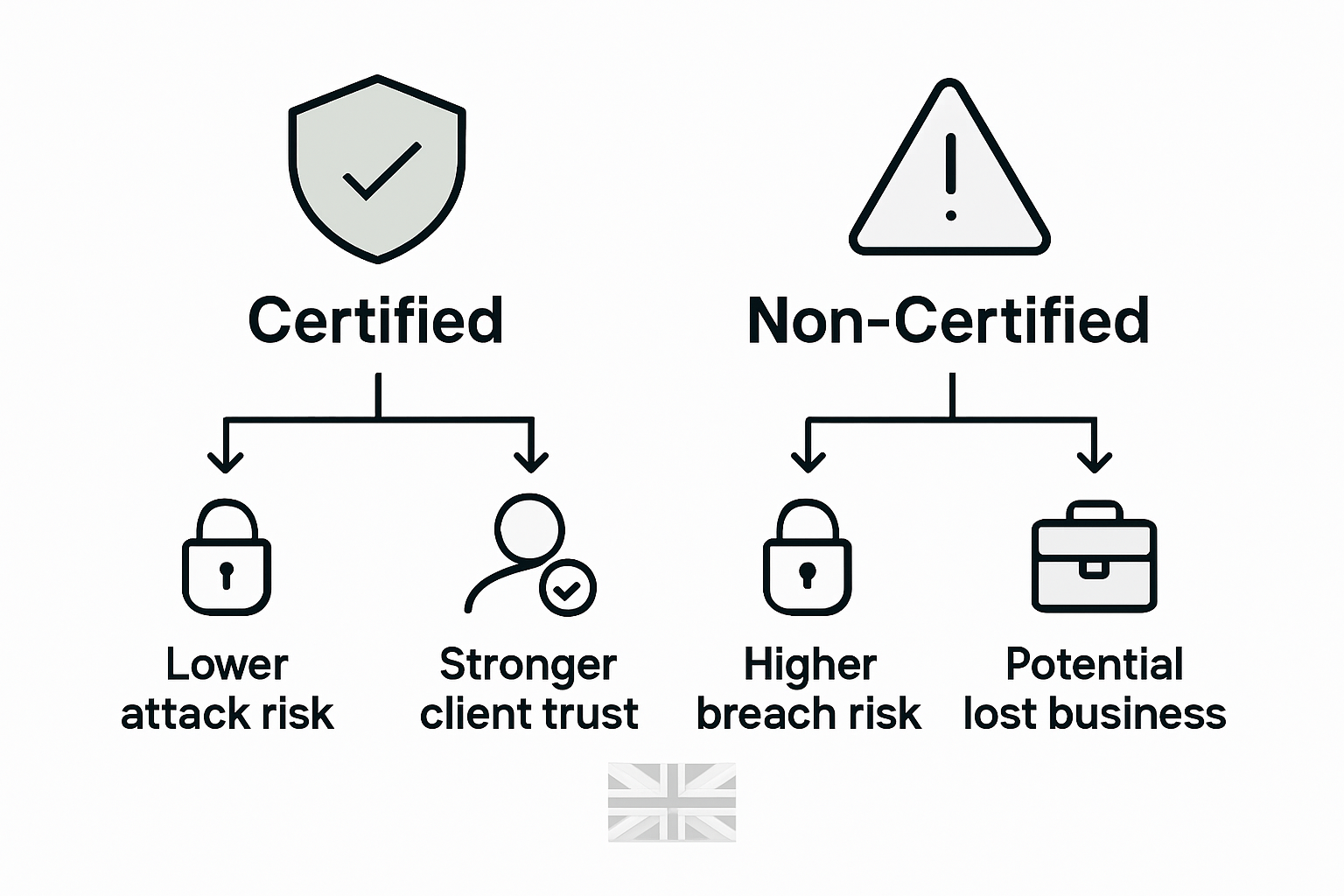
The National Cyber Security Centre highlights that most cyber attacks target basic security weaknesses, which could be easily prevented through structured certification processes. Unprotected businesses become attractive targets for cybercriminals, with small enterprises often perceived as having less sophisticated defence mechanisms compared to larger corporations.
Potential risks of non-certification include:
Increased vulnerability to cyber attacks
Higher probability of data breaches
Potential legal and regulatory penalties
Loss of customer trust and confidence
Difficulty securing contracts with larger organisations
Potential financial losses from security incidents
Reduced insurance coverage or higher premium rates
By neglecting cyber certification, small businesses essentially leave their digital doors wide open. The UK government’s strategic aim is to make the nation the safest online environment, and certification provides a critical pathway for SMEs to demonstrate their commitment to robust cybersecurity practices. Proactive certification is not just a technical requirement - it’s a strategic investment in business resilience and ongoing operational security.
Continuous Compliance and Long-Term Benefits
Cyber certification is not a one-time achievement, but a dynamic, ongoing process of maintaining and enhancing digital security infrastructure. Continuous compliance strategies enable businesses to stay ahead of emerging cyber threats and maintain robust defensive capabilities.
The annual recertification process is crucial for UK businesses. As Jisc highlights, organisations need systematic support to renew their certifications consistently, ensuring they stay protected year after year. The National Cyber Security Centre notes that Cyber Essentials has demonstrated steady growth, reflecting its increasing recognition and positive impact on national cyber resilience.
Long-term benefits of maintaining continuous compliance include:
Proactive threat identification and mitigation
Regular security infrastructure updates
Enhanced organisational cybersecurity maturity
Continuous learning and skill development
Reduced likelihood of significant security incidents
Improved stakeholder and customer confidence
Potential insurance and contractual advantages
By treating cybersecurity as an ongoing journey rather than a destination, UK SMEs can transform compliance from a bureaucratic requirement into a strategic business advantage. Continuous certification not only protects digital assets but also demonstrates an organisation’s commitment to maintaining the highest standards of operational security and technological adaptability.
Secure Your SME with Expert Cyber Essentials Support
UK SMEs face significant challenges in achieving and maintaining vital cyber certification like Cyber Essentials and Cyber Essentials Plus. The article highlights key pain points such as navigating complex compliance requirements, managing vulnerabilities throughout the year, and avoiding last-minute audit stresses. These concerns can feel overwhelming for busy business owners, directors, or small IT teams who must protect their organisations and build client trust in an increasingly demanding digital world.
At Freshcyber, we understand these challenges and provide clear, practical solutions. Our dedicated services help you stay fully compliant with Cyber Essentials through continuous vulnerability management and expert guidance. By partnering with us, you gain peace of mind knowing your cyber certification is handled end-to-end, freeing you from the risks of non-certification like reputational damage and lost contracts.

Take control of your compliance journey today. Explore how Freshcyber’s straightforward and reliable approach to Compliance can keep your business safe every day of the year. Visit our website at Freshcyber now and discover how we can become your trusted cybersecurity partner.
Frequently Asked Questions
What is cyber certification and why is it important?
Cyber certification verifies and improves an organisation’s digital security capabilities. It establishes a standardised framework that helps businesses protect their digital assets and builds trust with customers and stakeholders.
How does Cyber Essentials certification benefit small businesses?
Cyber Essentials helps small businesses defend against common online threats, reducing their vulnerability to around 80% of standard cyber attacks. It also demonstrates a commitment to cybersecurity, which can enhance customer trust and confidence.
What are the risks of not obtaining cyber certification?
Without cyber certification, businesses expose themselves to increased vulnerability to attacks, potential data breaches, legal penalties, and loss of customer trust. They may also face challenges securing contracts with larger organisations.
How often do businesses need to renew their cyber certifications?
Cyber certification is not a one-time achievement; it requires continuous compliance and annual recertification to stay updated with emerging threats and maintain robust cybersecurity infrastructure.
Recommended
Comments