Cardholder Data Security: Protecting Payment Information at UK SMEs
- Gary Sinnott

- Feb 2
- 8 min read

Staying ahead of payment card fraud is a constant challenge for UK retailers dealing with sensitive financial data on a daily basis. For IT Managers and Directors at British retail SMEs, understanding exactly what counts as cardholder data and how it must be protected under PCI DSS 4.0 is more than a technical requirement - it is a critical safeguard against costly breaches and reputational harm. This guide explores the core components of cardholder data, why robust controls matter, and the practical steps SMEs can take to secure compliance and customer trust.
Table of Contents
Key Takeaways
Point | Details |
Cardholder Data Definition | Cardholder data includes critical information such as the Primary Account Number (PAN) and cardholder name, which must be protected to prevent fraud. |
PCI DSS Compliance Importance | UK SMEs should prioritise PCI DSS compliance to safeguard payment information and avoid legal and financial repercussions. |
Security Best Practices | Implementing stringent data handling protocols, including encryption and access controls, is essential for protecting sensitive financial data. |
Continuous Monitoring and Training | Regular audits and employee training are vital for maintaining robust cybersecurity and responding effectively to potential threats. |
Defining Cardholder Data and Its Components
Understanding cardholder data is essential for any business processing electronic payments. Payment card security standards define this sensitive information as a specific set of data elements critical to financial transactions. These details must be carefully protected to prevent potential fraud and maintain customer trust.
Cardholder data typically comprises several key components:
Primary Account Number (PAN): The unique 12-16 digit number printed on payment cards
Cardholder Name: Full name as it appears on the payment card
Expiration Date: Month and year when the card becomes invalid
Service Code: A three-digit number providing additional transaction processing information
Beyond these standard details, PCI security standards also distinguish sensitive authentication data, which includes more restricted information:
Card verification codes (CVV/CVC)
Full magnetic stripe or chip data
Personal Identification Numbers (PINs)
Electronic chip and track data
UK businesses must recognise that handling these data elements requires rigorous security protocols. Every piece of cardholder information represents a potential vulnerability if not properly managed and protected.
Here’s a reference table outlining how different types of cardholder data relate to business risk and required safeguards:
Data Type | Example Element | Business Risk | Essential Safeguard |
Cardholder Data | PAN, Name | Fraud, identity theft | Encryption, access controls |
Sensitive Authentication | CVV, PIN, Chip Data | Immediate unauthorised access | No storage, prompt deletion |
Transaction Metadata | Expiry Date, Service | Reputation damage, compliance | Secure transmission channels |
Payment System Logs | Audit Trails | Target for hackers | Comprehensive monitoring |
Pro tip: Implement strict data handling procedures that limit access to cardholder data and ensure immediate deletion of sensitive information after transaction processing.
PCI DSS and UK Cardholder Data Rules
The Payment Card Industry Data Security Standard (PCI DSS) represents a critical framework for protecting financial transactions across the United Kingdom. PCI security standards establish comprehensive guidelines that govern how businesses handle, process, and secure payment card information, ensuring robust protection against potential data breaches.
For UK Small and Medium Enterprises (SMEs), PCI DSS compliance involves several key requirements:
Maintaining a secure network infrastructure
Implementing robust access control measures
Regularly monitoring and testing network security
Developing comprehensive information security policies
Protecting stored cardholder data through encryption
Maintaining vulnerability management programmes
The compliance process varies depending on the organisation’s transaction volume and payment processing methods. Cybersecurity compliance frameworks typically categorise businesses into different validation levels, each with specific assessment requirements:
Level 1: Merchants processing over 6 million card transactions annually
Level 2: Merchants processing 1-6 million card transactions annually
Level 3: Merchants processing 20,000-1 million e-commerce transactions
Level 4: Merchants processing fewer than 20,000 e-commerce transactions
Non-compliance can result in significant financial penalties, potential legal consequences, and substantial reputational damage. UK businesses must therefore treat PCI DSS not as a mere checkbox exercise, but as a fundamental aspect of their cybersecurity strategy.
Pro tip: Conduct an annual comprehensive review of your cardholder data handling processes and invest in continuous staff training to maintain robust PCI DSS compliance.
Cardholder Data Storage and Transmission Explained
Cardholder data protection represents a critical security imperative for UK businesses, requiring meticulous approaches to both data storage and transmission. PCI DSS requirements establish strict guidelines that mandate comprehensive security protocols for managing payment card information throughout its lifecycle.
Specifically, organisations must adhere to several key principles for secure data handling:
Minimise the volume of stored cardholder data
Encrypt data both at rest and during transmission
Implement robust access control mechanisms
Use secure and validated payment applications
Regularly audit and monitor data storage practices
Develop clear data retention and disposal policies
The storage of cardholder data requires particular attention. Secure data management strategies recommend organisations should:
Store only legally required data elements
Truncate Primary Account Numbers (PAN)
Protect stored data through strong encryption
Limit access to sensitive information
Maintain comprehensive logging of data access
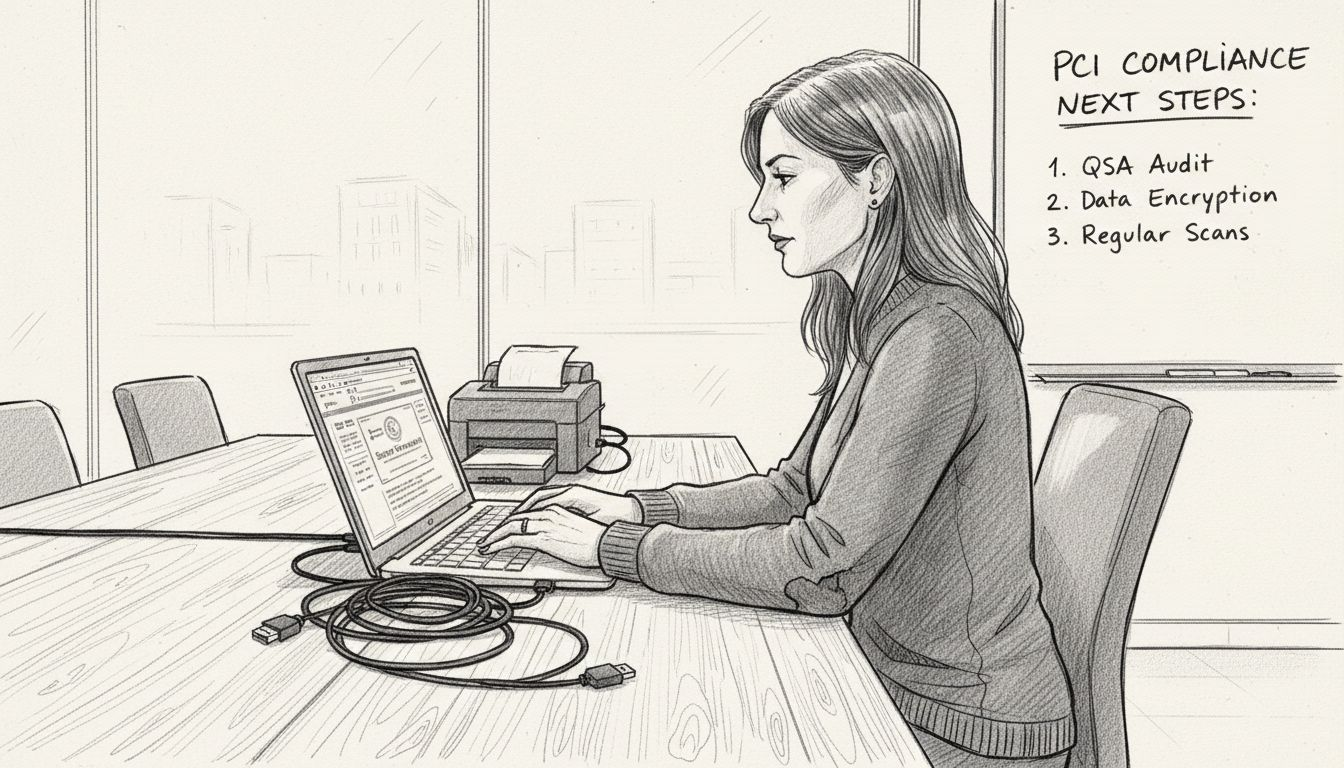
Transmission of cardholder data demands equally rigorous protection. Any data transmitted across public networks must be encrypted using robust cryptographic protocols, ensuring that sensitive financial information remains protected from potential interceptception.
Pro tip: Implement a strict “need-to-know” principle for cardholder data access and regularly conduct comprehensive audits to verify data handling compliance.
Common Threats and Breach Scenarios in SMEs
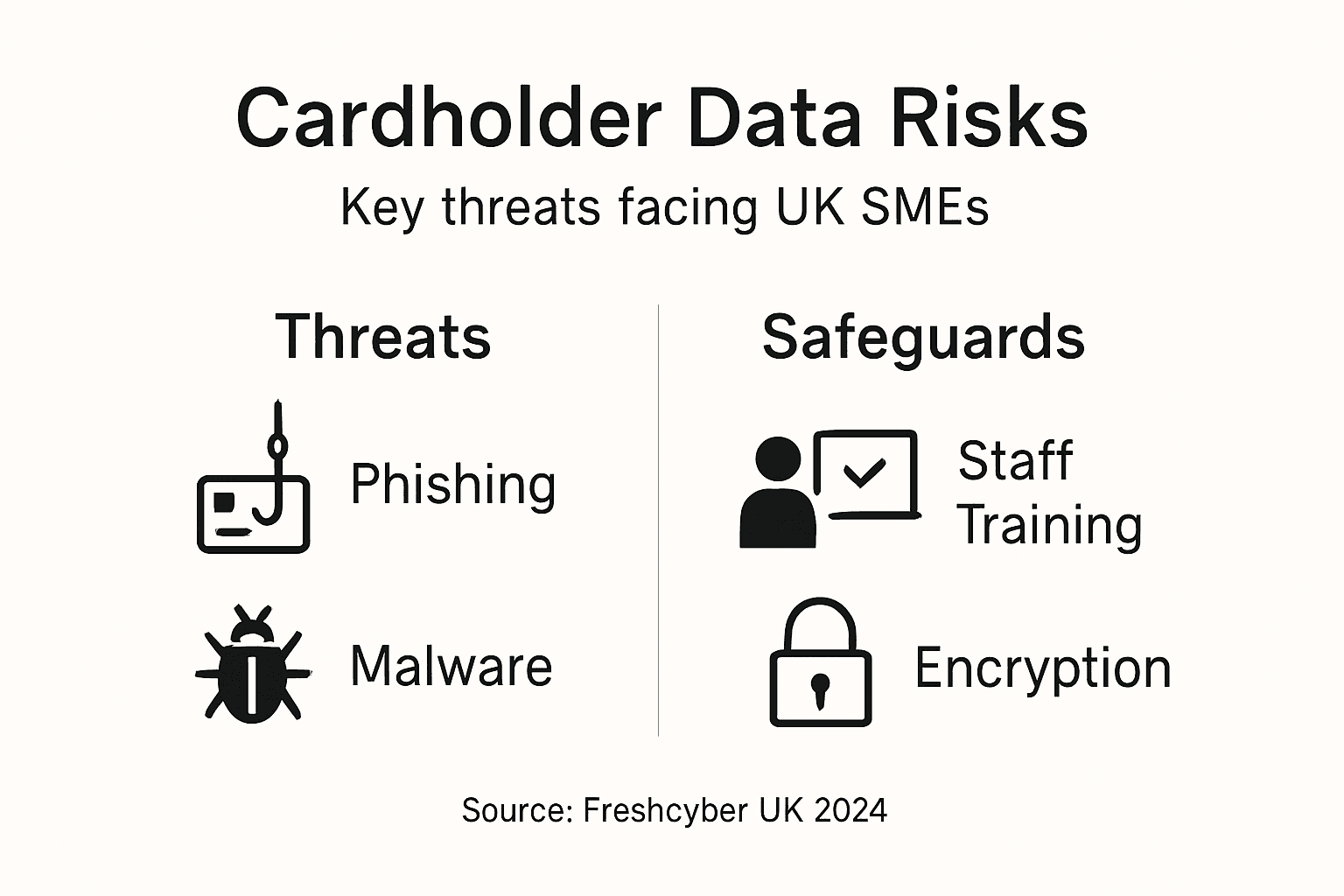
UK small and medium enterprises face an increasingly complex cybersecurity landscape, with cyber security breaches posing significant operational risks. Recent government research reveals that 43% of businesses have experienced security incidents, highlighting the urgent need for comprehensive protection strategies.
The most prevalent threats confronting UK SMEs include:
Phishing attacks: Fraudulent emails designed to steal sensitive credentials
Ransomware: Malicious software encrypting business-critical data
Social engineering: Psychological manipulation to breach security protocols
Insider threats: Risks originating from employees or contractors
Payment system vulnerabilities: Weaknesses in point-of-sale infrastructure
Cybersecurity research highlights several critical breach scenarios that can devastate SME operations:
Credential compromise through weak authentication
Unpatched software exploitation
Inadequate network segmentation
Insufficient employee security awareness
Lack of robust incident response planning
These vulnerabilities stem from common systemic weaknesses, including limited cybersecurity budgets, insufficient staff training, and fragmented security approaches. Small businesses often lack dedicated security teams, making them particularly susceptible to sophisticated cyber attacks.
Pro tip: Implement a comprehensive security awareness programme that includes regular staff training, simulated phishing exercises, and clear incident reporting protocols.
Key Responsibilities for SME Compliance
UK Small and Medium Enterprises (SMEs) must navigate a complex landscape of PCI DSS compliance requirements, which demand comprehensive and proactive security management. Understanding these responsibilities is crucial for protecting cardholder data and maintaining robust cybersecurity defences.
Key compliance responsibilities include:
Network Security: Building and maintaining secure network infrastructures
Data Protection: Implementing robust encryption and access control mechanisms
Vulnerability Management: Developing systematic approaches to identifying and mitigating risks
Policy Development: Creating comprehensive security policies and procedures
Continuous Monitoring: Establishing ongoing surveillance of payment systems
Compliance best practices recommend SMEs focus on several critical areas:
Assign clear ownership for security activities
Implement risk management frameworks
Conduct regular compliance assessments
Ensure third-party provider compliance
Develop robust incident response protocols
Successful compliance requires a holistic approach that integrates technological solutions, employee training, and strategic risk management. SMEs must recognise that compliance is not a one-time achievement but an ongoing commitment to protecting sensitive financial information.
For SMEs, understanding responsibilities is crucial. This table summarises how compliance actions map to security goals:
Compliance Action | Security Goal | Organisational Benefit |
Encrypting cardholder data | Prevent unauthorised access | Reduced risk of data breach |
Restricting network access | Limit internal vulnerabilities | Stronger defence against attacks |
Conducting regular audits | Early detection of weaknesses | Continued regulatory compliance |
Staff security training | Prevent human error | Enhanced incident response |
Pro tip: Designate a dedicated compliance officer or team responsible for maintaining and updating your organisation’s cybersecurity policies and practices.
Best Practices for Cardholder Data Protection
Protecting cardholder data requires a comprehensive and strategic approach that goes beyond simple compliance checkboxes. Cardholder data protection strategies demand meticulous attention to detail and a proactive security mindset across all organisational levels.
Key best practices for SMEs include:
Data Minimisation: Collect and retain only essential payment information
Encryption: Implement robust encryption for data at rest and in transit
Access Control: Restrict data access to authorised personnel only
Secure Payment Infrastructure: Use PCI-certified payment terminals
Regular Security Audits: Continuously monitor and test security systems
Cybersecurity experts recommend implementing comprehensive security protocols that encompass:
Developing clear security policies
Conducting regular staff training
Implementing multi-factor authentication
Creating robust incident response plans
Maintaining comprehensive access logs
Successful cardholder data protection requires more than technological solutions. It demands creating a security-conscious culture where every team member understands their role in safeguarding sensitive financial information.
Pro tip: Conduct quarterly simulated security breach exercises to test and improve your organisation’s cardholder data protection readiness.
Strengthen Your SME’s Cardholder Data Security with Freshcyber
Managing cardholder data securely is a pressing challenge for UK SMEs, as the article highlights. From protecting Primary Account Numbers to maintaining PCI DSS compliance, the risks of data breaches and cyber threats demand expert guidance. If you feel overwhelmed by encryption requirements or struggle with implementing comprehensive vulnerability assessments and incident response plans, you are not alone. Freshcyber specialises in helping businesses like yours navigate these complexities with confidence.
Freshcyber’s Virtual CISO (vCISO) service offers you executive-level security leadership tailored specifically for SMEs. We develop strategic roadmaps and handle your PCI DSS compliance, ensuring encryption, access control, and continuous monitoring meet exacting standards. With our assistance, you can move beyond mere certification towards true digital resilience, reducing risk and building trust with your customers.
Explore how our Virtual CISO service integrates strategic oversight with hands-on vulnerability assessments and penetration testing. Protect your payment infrastructure with Freshcyber as your dedicated security partner.

Secure your SME today before threats compromise critical cardholder data. Contact us at Freshcyber to get started on a personalised plan that puts your business defenses ahead of emerging risks and compliance demands.
Frequently Asked Questions
What is cardholder data and why is it important?
Cardholder data refers to sensitive information such as the Primary Account Number (PAN), cardholder name, expiration date, and service code necessary for financial transactions. It is crucial to protect this data to prevent fraud and maintain customer trust.
What are the key components of PCI DSS compliance for SMEs?
Key components of PCI DSS compliance for SMEs include maintaining a secure network, implementing access control measures, regularly monitoring network security, encrypting stored cardholder data, and developing robust information security policies.
How can SMEs protect cardholder data during transmission?
SMEs can protect cardholder data during transmission by encrypting data using strong cryptographic protocols, ensuring that sensitive information is secure when sent across public networks.
What are common threats to cardholder data security in SMEs?
Common threats to cardholder data security in SMEs include phishing attacks, ransomware, social engineering, insider threats, and vulnerabilities in payment systems, making it essential for businesses to implement comprehensive security measures.
Recommended
Comments