Benefits of Cyber Essentials 2025 Update: Complete Guide


Over 80 percent of British organisations have experienced a cyber attack in the past year. With digital threats on the rise, understanding how to stay protected is more important than ever. Cyber Essentials 2025 sets out the latest requirements to help businesses in the UK defend against common security risks. This article lays out what you need to know about the updated certification so you can keep your data safe and show your commitment to strong cybersecurity.
Table of Contents
Key Takeaways
Point | Details |
Cyber Essentials Certification | The Cyber Essentials framework provides a structured approach to mitigate common cybersecurity risks and enhance digital safety for organisations. |
Certification Levels | Organisations can choose between Cyber Essentials Standard and Plus, with the latter offering more rigorous verification through technical assessments. |
Legal and Regulatory Compliance | Obtaining certification aids in compliance with emerging cybersecurity regulations, serving as a proactive measure against legal risks. |
Business Benefits | Certification demonstrates a commitment to cybersecurity, enhances client confidence, and may provide competitive advantages in tender processes. |
Defining Cyber Essentials 2025 Requirements
Cyber Essentials 2025 represents the UK’s fundamental cybersecurity certification framework designed to help organisations protect themselves against common digital threats. Cyber Essentials Explained: Certification, Benefits, and Compliance provides a comprehensive overview of this critical standard.
According to the National Cyber Security Centre, the certification focuses on five key technical controls that organisations must implement to achieve robust cybersecurity protection. These essential controls include:
Boundary Firewalls and Internet Gateways: Protecting network entry points
Secure Configuration: Ensuring systems are configured with security in mind
Access Control: Managing and restricting user permissions
Malware Protection: Implementing robust defence mechanisms against malicious software
Security Update Management: Maintaining current and patched software systems
The 2025 update introduces significant enhancements to address evolving cybersecurity challenges. As discussed by IT Governance, these changes include new requirements for remote working environments, passwordless authentication strategies, and more comprehensive vulnerability management.
For UK small and medium enterprises, understanding these requirements is not just about compliance - it’s about building a proactive security posture. The Cyber Essentials certification provides a structured approach to identifying and mitigating potential cybersecurity risks, helping businesses demonstrate their commitment to digital safety to clients, partners, and stakeholders.
Types of Certification: Standard vs Plus
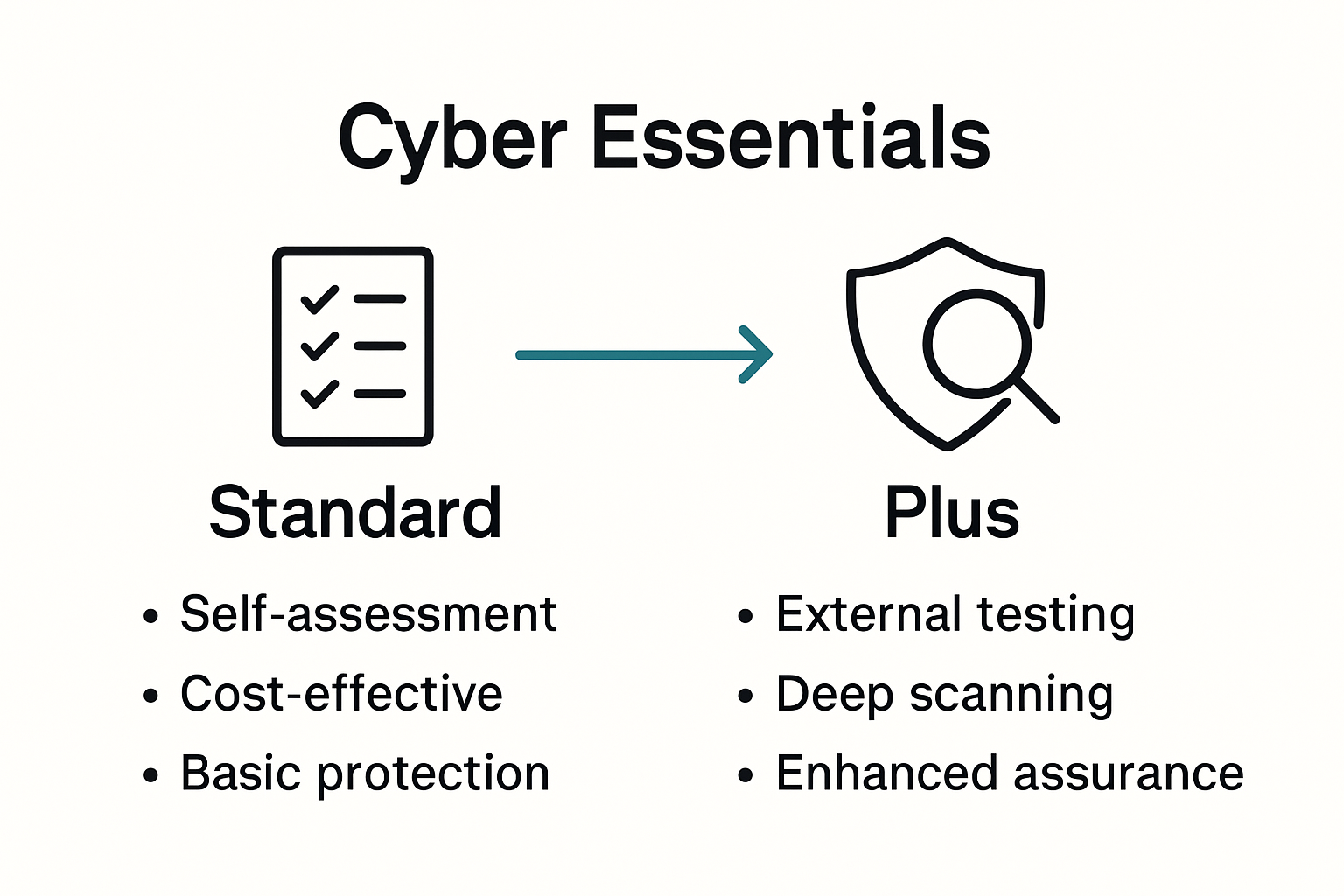
Cyber Essentials offers two distinct certification levels: Standard and Plus, each providing organisations with different levels of cybersecurity validation and assurance. Why Businesses Need Cyber Essentials Certification highlights the importance of understanding these certification tiers.
According to Paul Reynolds, the key differences between Standard and Plus certifications lie in their assessment processes and depth of security verification. The Cyber Essentials Standard certification involves a self-assessment questionnaire where organisations evaluate their own cybersecurity controls, providing a baseline level of protection. In contrast, the Cyber Essentials Plus requires an additional technical verification through hands-on vulnerability testing and on-site assessments.
The certification levels cater to different organisational needs and risk profiles:
Cyber Essentials Standard:
Self-assessment model
Cost-effective entry point
Demonstrates basic cybersecurity commitment
Suitable for smaller businesses with limited resources
Cyber Essentials Plus:
External technical verification
In-depth vulnerability scanning
Comprehensive security assessment
Preferred by organisations with higher security requirements
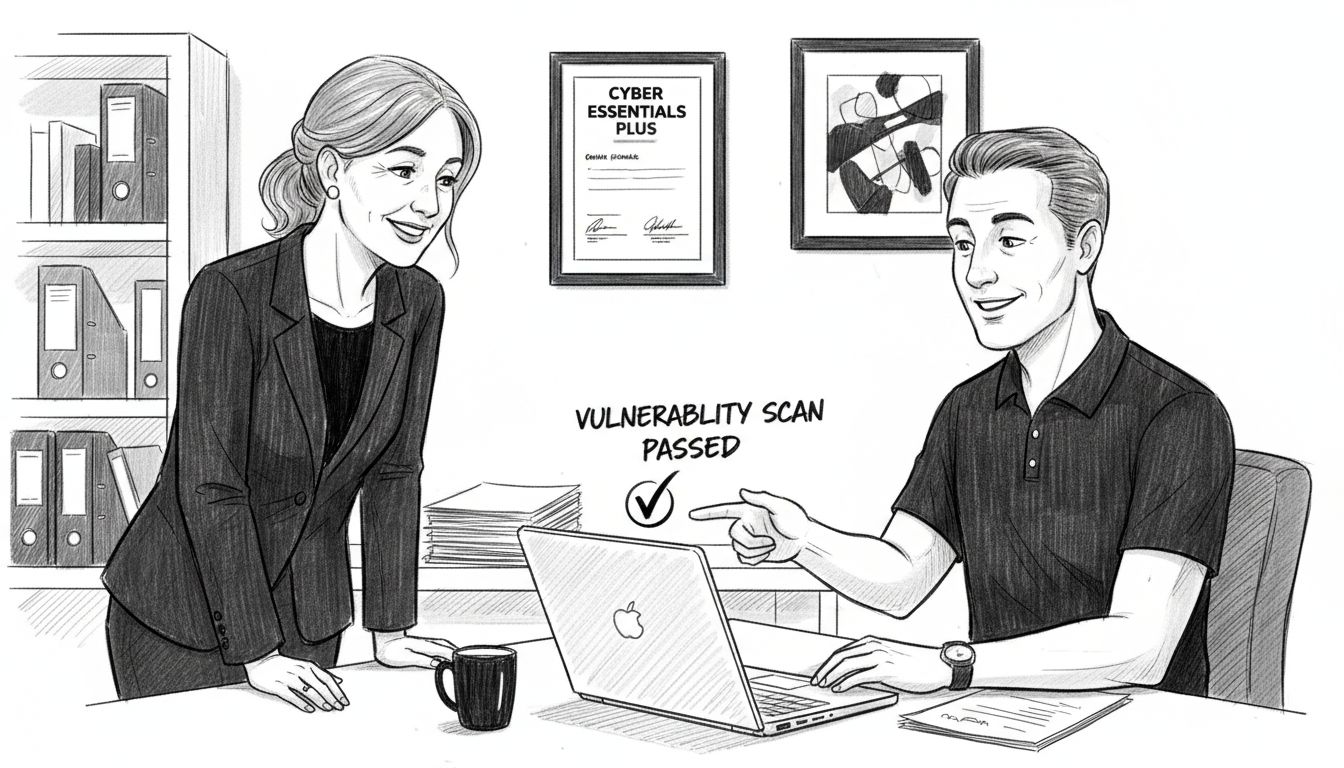
Choosing between Standard and Plus depends on specific business contexts, such as contractual requirements, data sensitivity, and industry regulations. For many organisations, the Plus certification offers a more rigorous validation of their cybersecurity practices, providing enhanced credibility and confidence to clients and stakeholders.
Key Business Benefits for UK SMEs
Cyber Essentials certification offers UK small and medium enterprises a strategic framework to enhance their cybersecurity posture and demonstrate commitment to digital protection. 7 Proven Vulnerability Management Best Practices for SMEs provides additional insights into building robust security strategies.
According to GOV.UK, the Cyber Essentials standard has become a benchmark certification that organisations consistently strive to achieve. The certification delivers multiple critical benefits for UK SMEs:
Competitive Advantage: Differentiates businesses in tender processes
Client Confidence: Demonstrates proactive approach to cybersecurity
Risk Mitigation: Systematically addresses common cyber vulnerabilities
Insurance Considerations: Potentially reduces cybersecurity insurance premiums
Supply Chain Requirements: Meets many contract and procurement standards
Beyond these immediate advantages, Cyber Essentials provides a structured approach to understanding and implementing fundamental security controls. Small businesses gain a clear roadmap for protecting digital assets, improving their resilience against cyber threats. The certification serves not just as a compliance tool, but as a strategic investment in organisational digital defence, helping SMEs build trust with clients and stakeholders while simultaneously strengthening their technological infrastructure.
Moreover, the certification process encourages continuous improvement. By requiring regular reassessment and highlighting potential security gaps, Cyber Essentials ensures that businesses remain adaptive and proactive in their cybersecurity approach, rather than becoming complacent after initial certification.
Demonstrating Compliance and Legal Protection
Cyber Essentials certification plays a crucial role in helping organisations navigate the increasingly complex landscape of legal and regulatory cybersecurity requirements. By obtaining this certification, businesses can proactively demonstrate their commitment to robust digital protection. ISO 27001 Certification Explained: Key Steps and Benefits offers additional context on compliance frameworks.
According to the Cyber Security and Resilience Bill introduced in the UK Parliament in November 2025, businesses are now required to meet stringent cybersecurity standards through regular audits and comprehensive reporting. The Cyber Essentials certification serves as a critical mechanism for organisations to:
Legal Compliance: Meet mandatory cybersecurity regulation requirements
Risk Management: Systematically document and address potential security vulnerabilities
Audit Readiness: Maintain comprehensive documentation for regulatory inspections
Liability Protection: Demonstrate due diligence in protecting digital assets
Regulatory Alignment: Align with emerging national cybersecurity standards
Beyond immediate legal requirements, the certification provides a structured framework for organisations to systematically assess and improve their cybersecurity posture. This approach not only helps businesses meet current regulations but also prepares them for future legislative changes, ensuring they remain adaptable and compliant in an evolving digital landscape.
Moreover, Cyber Essentials certification offers tangible legal protection by establishing a documented trail of proactive security measures. In the event of a potential cyber incident, organisations can demonstrate their commitment to best practices, potentially mitigating legal and financial repercussions while showcasing a responsible approach to digital risk management.
Reducing Cyber Risks and Liability
Cyber risks represent a significant threat to modern businesses, with potentially devastating financial and reputational consequences. 7 Common Security Vulnerabilities Every UK SME Must Know provides crucial insights into the most prevalent digital threats facing organisations today.
According to the National Cyber Security Centre, reducing cyber risks requires implementing five critical technical controls that form the foundation of robust cybersecurity defence. The Cyber Essentials framework systematically addresses these key risk areas:
Boundary Protection: Securing network entry and exit points
Configuration Management: Eliminating unnecessary system vulnerabilities
Access Control: Restricting system and data access
Malware Prevention: Implementing comprehensive protective measures
Patch Management: Ensuring timely software and system updates
By methodically addressing these fundamental controls, organisations can dramatically reduce their exposure to cyber threats. The approach goes beyond simple compliance, creating a proactive defence strategy that identifies and mitigates potential vulnerabilities before they can be exploited.
Moreover, reducing cyber risks directly translates to minimising potential financial and legal liabilities. Organisations that demonstrate a structured, comprehensive approach to cybersecurity are better positioned to defend against potential legal claims, potentially reducing insurance premiums and protecting their reputation in an increasingly digital business landscape.
Secure Your Cyber Essentials Journey with Freshcyber
Navigating the new Cyber Essentials 2025 requirements can feel overwhelming. From implementing boundary firewalls to managing continuous vulnerability updates, small and medium businesses must stay vigilant to avoid costly risks and compliance pitfalls. If you want practical, hands-on help to meet evolving standards such as passwordless authentication and enhanced remote working security, Freshcyber is here to guide you every step of the way. Our expertise turns technical controls and audit readiness into manageable actions, giving you confidence and control over your cybersecurity posture.

Explore how our dedicated Cyber Essentials services simplify certification and boost your security. Whether you need straightforward Cyber Essentials support or continuous Vulnerability Management to stay ahead of threats, Freshcyber delivers ongoing compliance without the stress. Act now to protect your business against cyber risks, strengthen your legal protection, and meet contract requirements seamlessly. Visit Freshcyber today and turn Cyber Essentials into your business advantage.
Frequently Asked Questions
What is Cyber Essentials?
Cyber Essentials is the UK’s fundamental cybersecurity certification framework that helps organisations protect against common digital threats by implementing five key technical controls.
What are the key benefits of obtaining Cyber Essentials certification?
Obtaining Cyber Essentials certification offers various benefits, including competitive advantage, enhanced client confidence, risk mitigation, potential reductions in cybersecurity insurance premiums, and compliance with supply chain requirements.
How does Cyber Essentials 2025 differ from previous versions?
Cyber Essentials 2025 introduces significant enhancements such as new requirements for remote working, passwordless authentication strategies, and more comprehensive vulnerability management to address evolving cybersecurity challenges.
What are the differences between Cyber Essentials Standard and Plus certifications?
Cyber Essentials Standard involves a self-assessment, providing basic cybersecurity validation, while Cyber Essentials Plus includes external technical verification through hands-on vulnerability testing and assessments, offering deeper security assurance.
Recommended
Comments